Introduction
Choosing the right towel radiator involves more than selecting a style or finish. This heating method can have a significant impact on year-round comfort, energy efficiency, and running costs, particularly in bathrooms where heating requirements often differ from the rest of the home.
Among the available options, some heating solutions offer greater flexibility than others by allowing homeowners to adapt to seasonal changes without compromising convenience. This guide explores how dual fuel towel radiators work, their advantages, typical costs, and the key factors to consider before deciding whether they are the right choice for your bathroom.
What is a dual fuel towel radiator?
A dual fuel towel radiator, also known as a dual fuel heating towel rail, is a towel radiator that operates using two separate heat sources: the property’s central heating system and an integrated electric heating element. This allows the radiator to function either as part of the central heating network or independently using mains electricity.
The electric heating element is installed into one of the radiator's connections and heats the internal heat-transfer fluid when activated. Switching between the two heat sources gives homeowners year-round flexibility.
Unlike a standard electric towel radiator, which relies entirely on electricity, or a central heating towel radiator, which only works when the boiler is operating, a dual fuel model combines the advantages of both systems. This makes it particularly suitable for bathrooms where year-round towel drying and supplementary heating are required.
How does a dual fuel towel radiator work?
The electric heating element is typically installed into one of the radiator's lower connections, while the opposite connection remains linked to the central heating system through radiator valves. This configuration allows the towel radiator to function independently in electric mode or as part of the home’s hydronic heating system.
Depending on the season or household requirements, the method of operation differs:
How does it work in winter?
During the colder months, the towel radiator operates in the same way as a conventional central heating towel radiator. Hot water from the boiler circulates through the radiator, transferring heat across the bars to warm both the room and any towels placed on it.
In most installations, the electric heating element remains switched off during this period, as the central heating system provides sufficient heat. This allows the towel radiator to contribute to the property’s overall heating while operating efficiently alongside the other radiators.
How does it work in summer?
When the central heating system is switched off during warmer months, the electric heating element allows the radiator to continue operating independently. Once activated, the element heats the internal heat-transfer fluid, enabling the radiator to warm towels without requiring the boiler or the rest of the heating system to be turned on.
Because only the towel radiator draws power, the electricity used is limited to that single appliance rather than the whole heating system. Control options for the element are covered later in this guide.
How do you switch between modes?
The changeover is made at the valves. To move into summer mode, switch the element off and let the rail cool, then close both valves fully to isolate the rail from the central heating. Slightly loosen the air vent so the water inside has somewhere to expand as it heats. Only then switch the element on.
This sequence matters. If the valves are left open while the element is running, water continues to flow through the rail and the element can burn out.
To return to winter mode, open both valves and switch the element off. The rail rejoins the central heating automatically.
Leaving one valve open matters: water expands as it heats, and a rail sealed at both ends has no room for that expansion. Always follow the manufacturer's instructions for your specific model.
Dual fuel vs electric vs central heating towel radiators
Each type of towel radiator offers distinct advantages depending on the property’s heating system, energy requirements, and how the bathroom is used all year.
|
Feature |
Dual fuel towel radiator |
Electric towel radiator |
Central heating towel radiator |
|
Heat source |
Central heating and electricity |
Electricity only |
Central heating only |
|
Works in summer |
Yes |
Yes |
No |
|
Works with boiler off |
Yes |
Yes |
No |
|
Year-round towel warming |
Yes |
Yes |
Limited to heating season |
|
Installation |
Moderate |
Simple |
Standard plumbing installation |
|
Running costs |
Depends on heating mode used |
Electricity only |
Uses central heating system |
The choice usually comes down to the property rather than the product: dual fuel suits homes with existing central heating that want warm towels outside the heating season, electric suits properties without a wet system or where plumbing changes aren't practical, and central heating alone suits bathrooms used mainly in winter.
Benefits of a dual fuel towel radiator
Year-round use
Homeowners can switch between central heating in winter and electric heating in summer, ensuring warm towels and comfortable bathroom temperatures throughout the year.
Improved energy efficiency
Using the electric heating element to warm a single towel radiator is often more efficient than running the full central heating system.
Reduced damp and condensation
A warm rail dries towels faster and helps clear excess moisture from the room, which reduces the damp and mustiness that builds up in poorly ventilated bathrooms.
Wide range of designs
Dual fuel towel radiators are available in various sizes, styles, and finishes, making them suitable for both modern and traditional bathrooms.
Dual fuel towel radiator costs
The overall costs depend on the radiator size, heating element, installation requirements, and how frequently electric mode is used.
Purchase and installation costs
Dual fuel towel radiators are generally more expensive than standard models because they require an electric heating element and compatible valves. As a guide:
- Dual fuel kit (element, T-piece and valve): £36–£90, depending on wattage and whether the element is standard, thermostatic or smart
- Dual fuel valve set bought separately: £30–£90 depending on finish and style
- Installation, both trades: around £400 on average, rising to £700 where pipework or cabling is more involved
- The extra cost over a standard rail comes from the electrical side: the element needs a fused spur near the entry valve, fitted by a certified electrician and signed off under Building Regulations.
Running costs
In winter the rail draws on the boiler, so its running cost is part of the central heating. The cost worth calculating is the summer one, when the element runs on mains electricity.
The cost of operating a dual fuel towel radiator depends on two factors:
Running cost = Heating element power (kW) x Electricity tariff (cost per kWh) x Operating time (hours)
For example, a 300 W (0.3 kW) heating element operating for 2 hours uses:
0.3 x 2 = 0.6 kWh
Multiply this by your electricity tariff to estimate the running cost.
Is it cheaper to run than an electric-only towel rail?
Not necessarily. Both systems consume electricity when operating in electric mode. However, a dual fuel towel radiator offers greater flexibility by allowing homeowners to use central heating during colder months, and electric heating only when required.
Can any towel radiator be converted to dual fuel?
Not every towel radiator can be converted to a dual fuel towel radiator. The radiator must be compatible with an electric heating element and have the appropriate pipe connections to accommodate both the central heating system and the heating element.
Many modern heating towel rails are designed to support dual fuel installation, but older or certain specialist models may not be suitable. Before converting an existing radiator, check the manufacturer’s specifications or consult a qualified installer to ensure compatibility.
Two things are worth weighing before converting. Modifying the rail may affect its original warranty, so check the terms first. And once the kit and installation are accounted for, conversion can cost more than simply buying a purpose-built dual fuel rail — where the components are matched and certified as a set.
Choosing the heating element
Selecting the correct heating element is essential for safe and efficient operation. The element wattage should match the heat output of the towel radiator. An undersized element won't warm the rail properly; an oversized one risks burning out prematurely.
If you know the rail's output in BTU but not in watts, divide the BTU figure by 3.41. A 1,500 BTU rail, for example, needs an element of around 440W.
As a general guide:
- 150–300W where the rail only needs to warm and dry towels
- 300–600W for a standard bathroom rail
- 600W and above where the rail is the room's main heat source, or the bathroom is large or poorly insulated
Many homeowners choose thermostatic heating elements, which automatically regulate temperature and often include timers or programmable settings. These features help improve energy efficiency while ensuring towels remain warm without unnecessary electricity consumption.
Choosing the style and finish
Dual fuel towel radiators are available in a wide range of styles to complement different bathroom interiors. Popular options include ladder towel radiators, flat panel designs, and vertical heated towel rails, each offering a balance of practicality and modern aesthetics.
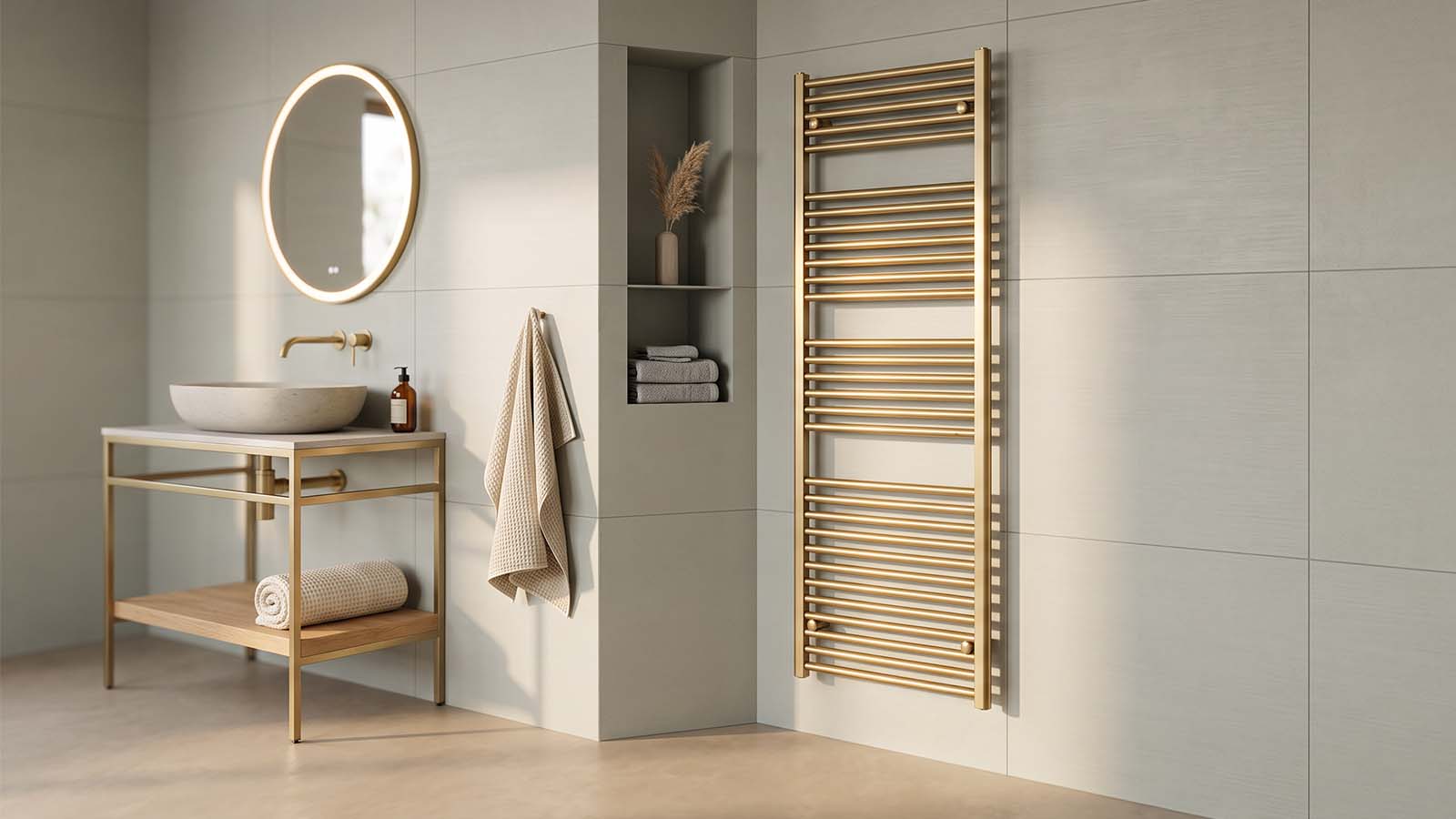
Equally important is the finish. Chrome, matt black, anthracite, and white remain among the most popular choices, while finishes such as brushed brass, brushed bronze, brushed nickel, and gunmetal are increasingly selected for contemporary bathroom designs. When choosing a towel radiator, consider not only its appearance but also the required heat output, available wall space, and compatibility with your heating system.
Conclusion
Whether a dual fuel towel radiator is worth fitting comes down to how much the bathroom is used outside the heating season. For a household that wants dry towels in August without firing the boiler, it solves a problem a standard rail can't. For a bathroom used mainly in winter, a plain central heating rail does the same job for less.
While the initial purchase and installation costs may be higher than those of a standard towel radiator, the added convenience, seasonal flexibility, and improved energy efficiency make it a worthwhile investment for many homes.