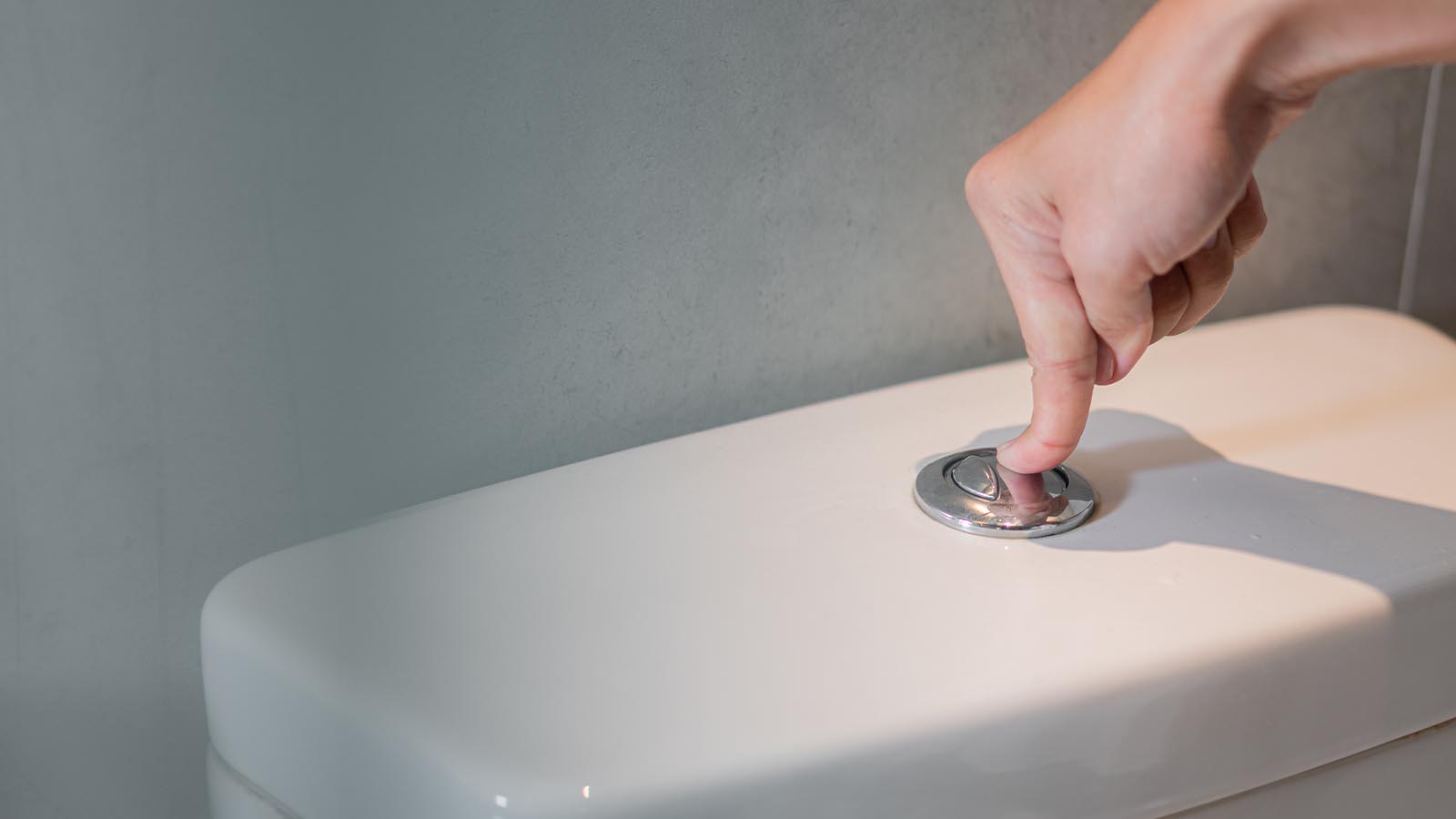
What Is a Toilet Flush Plate?
A toilet flush plate is the visible panel — usually mounted on the wall — that you press to flush a toilet connected to a concealed cistern. It's also called an actuator plate or push plate, and it replaces the traditional lever or lid-mounted button. In practice it's the only part of a hidden cistern you actually see. If you're shopping in the UK you'll almost always see this part listed as a flush plate, while US and continental European retailers often sell the identical component as an actuator or push plate — worth knowing when you're comparing products across regions.
How a flush plate works
Behind the plate sits a water tank built into the wall or a metal stud frame. When you press the button (or buttons), the plate operates the cistern's flush valve and releases water into the pan. It does this in one of three ways: mechanically, using push-rods that physically connect to the valve; pneumatically, using air pressure sent through a small hose; or electronically, using a touch or proximity sensor with a power supply. The plate also does a second, less obvious job — it's the removable access hatch to the tank, so a plumber can reach the fill and flush valves for maintenance without breaking into tiles or the wall.
Why it's used with concealed toilet cisterns
A concealed cistern (US: in-wall tank) hides the bulky water tank behind the wall or inside bathroom furniture, leaving only a slim plate on show. That's why the two always go together: the cistern delivers the clean, minimalist, space-saving look that's popular in modern US, UK and European bathrooms, and the flush plate for concealed cistern installations is both the control and the maintenance access for that hidden tank. Wall-hung and back-to-wall toilets almost always rely on this arrangement, which is a big part of why flush plates have become standard in new builds and renovations across all three markets.
Flush plate vs traditional flush button
On a standard close-coupled toilet, the cistern sits on top of the pan and you flush with a side lever or a button on the lid — the tank and the mechanism are right there in the open, and the button is fixed to the cistern it came with. A toilet flush plate flips that around: the tank is hidden, and the control is a flat panel set into the wall above the toilet. The practical upshot is twofold. First, a plate is a separate component that must be matched to the cistern behind it, rather than being part of the tank itself. Second, it opens up far more design freedom — finishes like chrome, matte black and brushed brass, and shapes from square to round to slim — where a top-mounted button gives you almost no styling choice.
Why choosing the right one matters
Here's the catch that trips a lot of people up: flush plates are not universal. Each plate is engineered for a specific cistern brand and range. Order the wrong one and it either won't fit the access opening or won't engage the flush valve, meaning a return and a delay. Getting it right the first time comes down to matching three things: the cistern's brand and model, its operating system (mechanical, pneumatic or electronic), and the plate's dimensions. Nail those, and the finish is simply a matter of taste — which is exactly what the rest of this guide will walk you through.
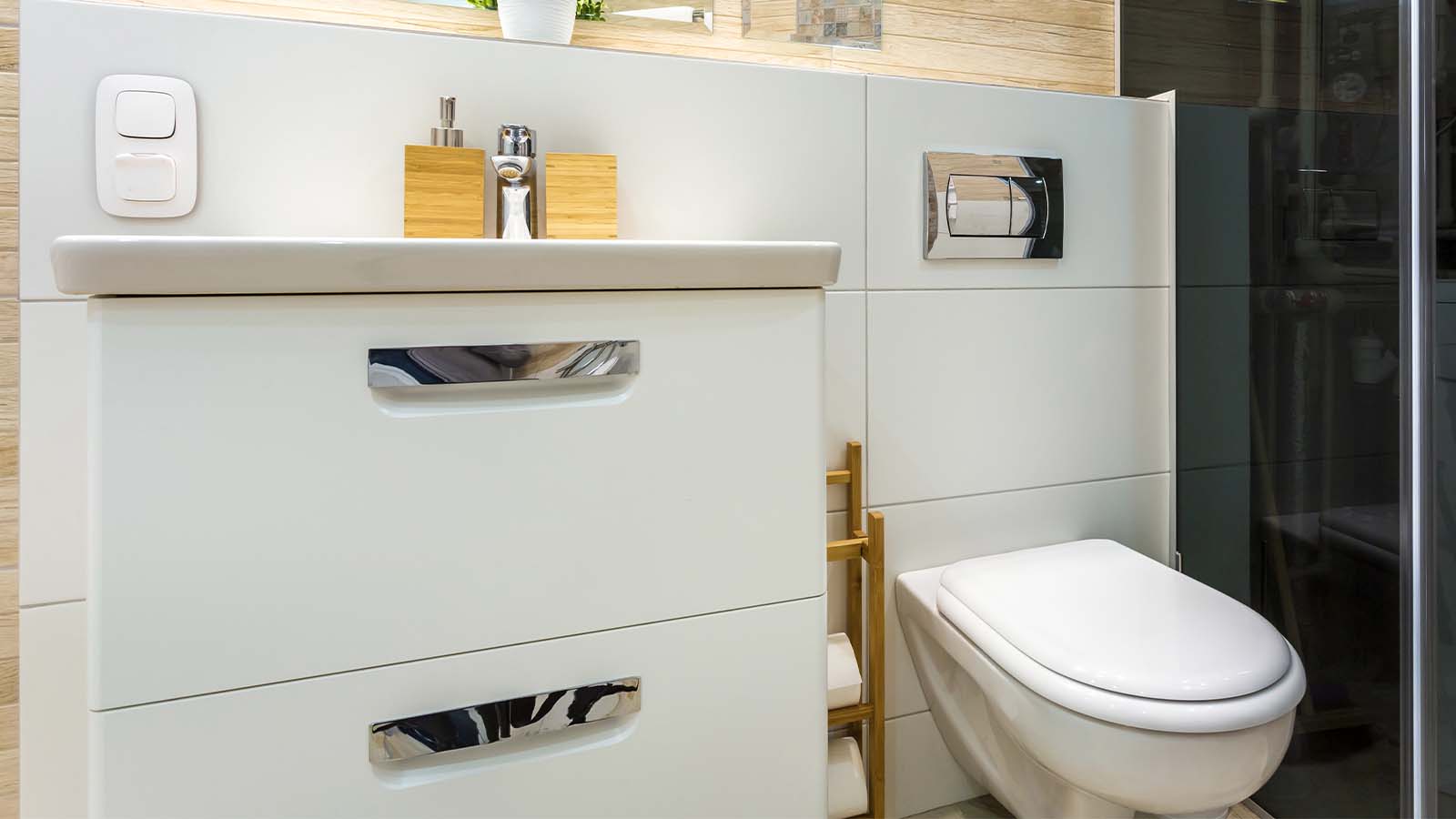
Are Flush Plates Universal?
In short, no — most are not. This is probably the most common question people ask before buying, and getting the answer wrong is the number-one reason plates get returned. A flush plate (US and European retailers often call it an actuator or push plate) is engineered to work with a specific cistern, so you can't simply buy any plate and expect it to fit any tank. A handful of aftermarket universal buttons exist for certain common valve types, but they're the exception, and even they only match a specific valve interface — not every cistern on the market. For the vast majority of installations, flush plate compatibility is something you have to confirm, not assume.
Here's why they don't interchange.
Compatibility depends on the cistern manufacturer
Each brand builds its plates to fit its own cisterns, and usually only certain ranges within that brand.That last point catches a lot of people out: matching the brand alone isn't enough, because manufacturers run several incompatible series side by side. This is exactly why identifying the cistern's brand and model number is the first step in any toilet flush button replacement.
Different operating mechanisms
A plate has to speak the same language as the valve behind it, and there are three mechanisms that don't cross over:
Mechanical — the plate connects to the flush valve through physical push-rods, so pressing the button directly lifts the valve. It's the most common and most reliable setup worldwide, but it means the plate must sit directly above or in front of the cistern, and a mechanical plate can only replace another mechanical plate from a compatible range.
Pneumatic — instead of rods, the button pushes air through a small tube, and that air pressure triggers the valve. This gives you more freedom over where the button sits (it can even be mounted away from the tank), and it tends to run quietly.
Electronic (sensor) — the plate flushes via a touch or proximity sensor and needs a power supply, either mains or battery. It's touchless and hygienic, which is why you'll see it in high-end homes and across US, UK and European public and commercial restrooms. These require the matching electronic cistern setup and an electrical connection, so they're the least interchangeable of the three.
Different mounting systems
Even where the mechanism matches, the way a plate physically attaches varies by brand. Some clip onto a hidden collar, others screw to a sub-frame or adapter that's specific to that cistern, and the depth at which the plate sits — flush with the tiles or slightly proud — differs too. A plate designed to clip onto one maker's frame simply has nothing to grip on another's.
Different dimensions
Finally, the access opening itself is a different size and shape from brand to brand, and often from range to range. Cut-out width and height vary by a few millimetres (or fractions of an inch), which is enough to leave a gap or stop a plate seating at all. Because US products are listed in inches and UK/European ones in millimetres, always measure your existing plate and opening in both units before ordering — especially if you're buying from an overseas retailer.
The practical takeaway: before you buy a replacement, identify the cistern's brand and model, confirm whether it's mechanical, pneumatic or electronic, and measure the opening. If you've inherited an unbranded cistern with no markings — common for renters or in older properties — a like-for-like plate can be hard or impossible to source, and you may need to replace the cistern's internals or the whole unit. That's the real cost of the flush plates aren't universal rule, and it's why matching carefully the first time is always worth the few extra minutes.
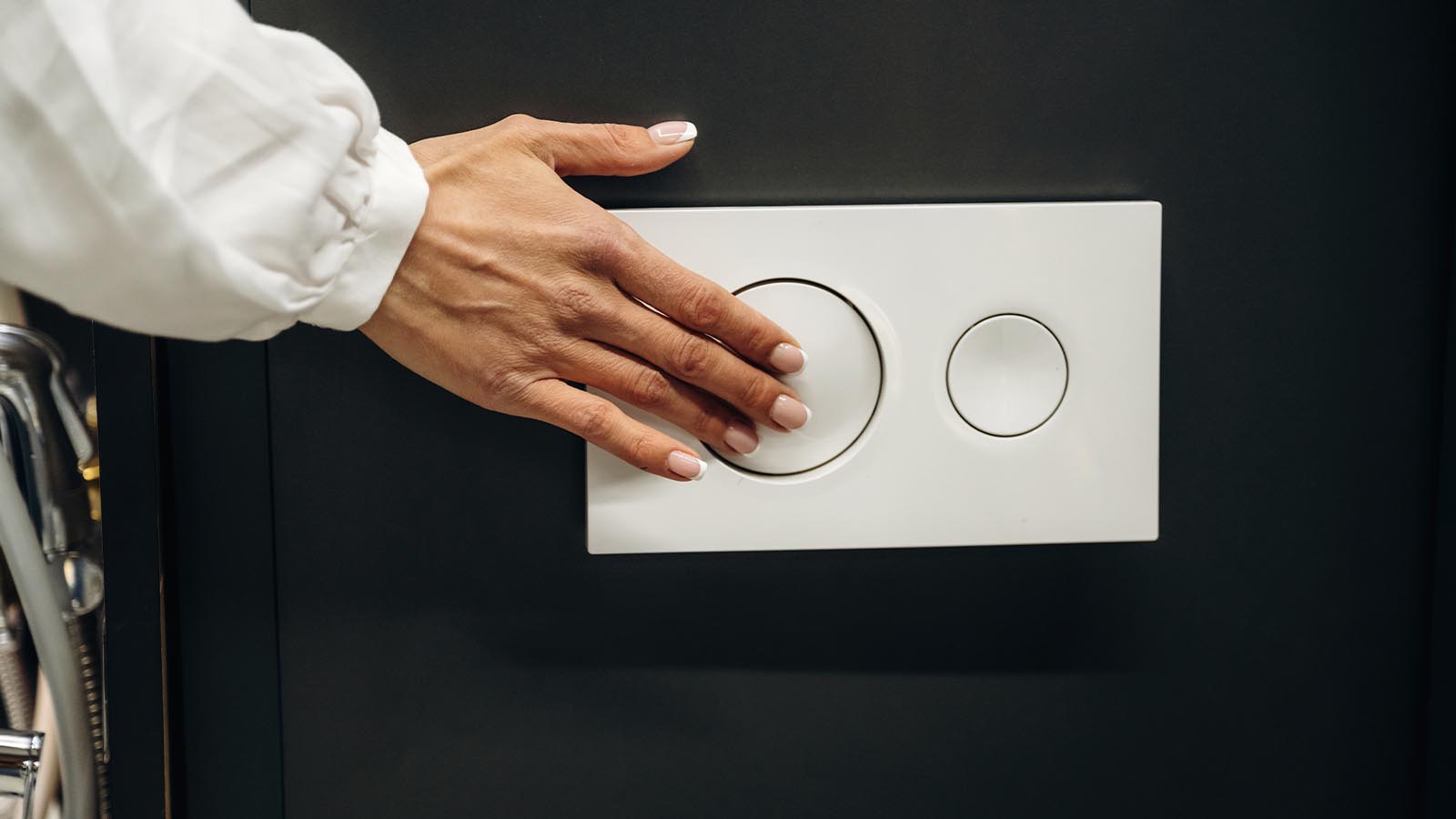
Types of Flush Plates
Flush plates split into three main types based on how they trigger the cistern's flush valve: mechanical, pneumatic and electronic. This is a separate decision from single versus dual flush (which controls water volume and can be found across all three types) — here we're talking about the operating mechanism. In most cases the type you can fit is dictated by the cistern already behind your wall, so flush plate compatibility decides it for you. But if you're specifying a new concealed system from scratch, knowing the trade-offs helps you pick the best flush plate for how you actually use the bathroom.
Mechanical Flush Plates
The most common type worldwide. A mechanical plate uses direct push rods — pressing the button physically pushes a rod that lifts the flush valve inside the cistern. There's no air, no electronics, just a simple physical linkage, which is exactly why this type is so popular.
The upsides are straightforward: simple installation, proven reliability, and the lowest cost of the three. Because the mechanism is so widely used, almost any plumber across the US, UK and Europe is familiar with it, and replacement parts and compatible plates are easy to source. The one constraint is positioning — the push rods only reach so far, so a mechanical plate has to sit directly above or in front of the cistern. Best for: standard installations, budget-conscious renovations, and anyone who values long-term reliability over extra features.
Pneumatic Flush Plates
A pneumatic plate replaces the rods with air tubes. Pressing the button pushes a small column of air through a flexible hose, and that air pressure trips the valve. It's a clever bit of engineering that solves the mechanical system's main limitation.
Its standout benefit is flexible positioning: because air travels down a tube, the button doesn't have to sit right in front of the tank. It can be mounted on the top of a vanity unit, on a side wall, or wherever suits the layout — useful for awkward or design-led bathrooms. Pneumatic plates also tend to offer smooth, light operation and run quietly. The trade-offs are a modestly higher price than mechanical and one extra component (the hose) in the system. Best for: tricky layouts, or any install where you want the flush button somewhere the cistern isn't.
Electronic Flush Plates
The premium option. An electronic plate uses touchless operation — it's sensor activated, flushing when you wave a hand or move close, and it needs a power supply (mains or battery). No physical contact means better hygiene, which is why this type dominates commercial washrooms and appears increasingly in high-end homes.
Beyond the hands-free flush, many electronic plates add features like night-lights, automatic flushing and touch-panel dual-flush selection. Naturally, they carry the highest cost, require an electrical connection behind the wall, and have more components that could eventually need servicing. You'll find them across premium bathrooms and public and commercial restrooms throughout the US, UK and Europe, where the hygiene and accessibility benefits justify the extra outlay. Best for: luxury bathrooms, accessibility-focused installs, and shared or commercial spaces.
Quick comparison
|
Type |
How it works |
Positioning |
Relative cost |
Best for |
|
Mechanical |
Push rods lift the valve |
Directly above/in front of cistern |
£ / $ (lowest) |
Standard installs, reliability, budget |
|
Pneumatic |
Air tube triggers the valve |
Flexible — button can sit away from tank |
££ / $$ (mid) |
Awkward layouts, quiet operation |
|
Electronic |
Sensor + power supply, touchless |
Flexible, but needs power behind wall |
£££ / $$$ (highest) |
Premium homes, commercial washrooms |
Whichever type appeals, remember the golden rule from earlier: flush plates are not universal, so what you can actually fit is usually determined by the cistern already installed. Identify that first — then, for a new build or full renovation where you're choosing everything from scratch, you have the whole range open to you, in single or dual flush and in any finish you like.
Single Flush vs Dual Flush Plates
Once you've settled on the operating type, the next choice is how much water the plate releases — and this is where single flush and dual flush plates part ways. It's one of the most practical decisions you'll make, because it affects your water bills and your environmental footprint every single day. Here's how each works and who benefits most.
How each one works
A single flush plate has one button that releases a single, fixed volume of water every time you press it — the same amount whether you're clearing liquid or solid waste. It's the simpler mechanism: one button, one flush, nothing to think about.
A dual flush plate gives you two buttons (or one split button): a larger one for a full flush and a smaller one for a reduced half flush. You choose the full flush for solid waste and the smaller flush for liquids, so most of the day you're using noticeably less water. This two-button design is now the default on most modern concealed cisterns sold across the US, UK and Europe. One important caveat carries over from earlier: the plate has to match what the cistern's valve supports, so you can only fit a dual flush plate if the cistern behind the wall is built for dual operation — always confirm this as part of your flush plate compatibility check.
Typical flush volumes
Volumes are capped by regulation, and the numbers differ by region — worth knowing if you're buying across borders:
|
Full flush |
Reduced flush |
|
|
UK / Europe (modern) |
~6 litres (1.6 gal), efficient models 4–4.5 L |
~3 litres (0.8 gal), down to ~2.6 L |
|
US federal maximum |
1.6 gpf (~6 L) |
— |
|
US WaterSense-labeled |
≤1.28 gpf (~4.8 L) |
often ~0.8–1.1 gpf (~3–4 L) |
|
Older / pre-regulation toilets |
9–13 L (2.4–3.4 gal) or more |
— |
For context: a single-flush cistern in the UK or Europe today is typically around 6 litres, while a US toilet is limited to 1.6 gpf and a water saving flush plate carrying the WaterSense label uses no more than 1.28 gpf. Older toilets — the ones a dual-flush upgrade most often replaces — used two to three times that.
Water usage and environmental benefits
The savings come from all those reduced flushes. Because roughly two-thirds of everyday flushes are for liquid waste, choosing the smaller button most of the time can cut the water a household sends down the toilet substantially — a busy family can save thousands of litres (or gallons) a year compared with a full flush every time, and far more if you're replacing an old high-volume toilet. Toilet flushing is one of the largest single uses of water in the average home, so this is one of the easiest places to reduce consumption.
The benefits stack up in three ways: lower water bills (especially if you're metered, as most US and increasingly UK/EU households are); less strain on local water supplies, which matters more each year in drought-prone regions; and reduced energy use at treatment plants, since less water pumped and treated means a smaller carbon footprint overall. A dual flush plate is a small component that delivers an outsized environmental return over its lifetime.
Which households benefit most
Dual flush is the clear pick for most people, and especially for:
Larger and busy households — more people means more flushes, so the per-flush saving multiplies fastest here.
Homes on a water meter — you pay for every litre or gallon, so the reduced flush pays you back directly.
Anyone in a water-stressed region — parts of the US Southwest, Southern Europe and drought-affected areas of the UK, where conservation is a genuine priority (and sometimes a regulatory one).
Renovations replacing an old toilet — the jump from a 9–13 litre flush to a modern dual system is where the biggest savings live.Single flush still has its place. It's mechanically simpler with fewer parts that can wear or stick, which some people prefer for reliability, and in a low-use setting — a rarely used guest cloakroom or a very small household — the extra water savings of dual flush are modest. It can also be the more budget-friendly choice up front.
The bottom line: for the great majority of US, UK and European bathrooms, a dual flush plate is the smarter long-term buy — it saves water and money with no real downside in daily use. Just make sure the concealed cistern behind your wall is set up for dual operation before you order the plate.
How to Identify Your Existing Flush Plate
Here's the reality most people run into: you only think about your flush plate when it cracks, sticks or stops working — and by then you have no idea what brand or model you're looking at. Because plates aren't interchangeable, identifying exactly what you have is the essential first move before buying a replacement flush plate. The good news is you don't need to be a plumber to work it out. Run through the six checks below (they take about ten minutes) and you'll have everything you need to order the right concealed cistern flush plate with confidence — wherever you're shopping in the US, UK or Europe.
1. Check for a brand logo
Start with the obvious. Look closely at the plate itself, its edges, and the buttons for a maker's name or logo. Knowing the brand instantly narrows your search, since each manufacturer's plates only fit its own cisterns. If there's genuinely no logo anywhere, that's a useful clue in itself — it often points to an unbranded or own-brand cistern, which can be harder to match.
2. Look for a model or series number
Brand alone isn't enough — you need the specific range. Gently remove the plate from the wall (most lift, unclip or unscrew) and look on the back of the plate and around the frame inside the opening, where a model name, series or part number is often printed.
3. Measure the plate and the opening
Measurements matter as much as the name, because cut-out sizes vary by a few millimetres between brands and ranges. With the plate removed, record:
The height and width of the plate itself.
The height and width of the access opening (the cut-out in the wall behind it).
The button layout — single button, or two buttons for dual flush, and their position (side by side, or stacked).
Crucially, note these in both millimetres and inches. US retailers list plates in inches while UK and European sites use millimetres, so having both prevents fitment errors if you end up ordering from an overseas store or comparing international listings.
4. Photograph the existing installation
Before you put anything back, take clear photos — of the plate on the wall, the back of the plate, the buttons, any logos or codes, and the mechanism visible inside the opening. Photos are invaluable when you're comparing products online or asking a retailer or plumber for help; many suppliers can identify a cistern from a good picture alone. A few minutes with your phone now saves a lot of guesswork later — and gives you a reference for putting everything back correctly.
5. Inspect the cistern through the access opening
Remember that the plate is also the hatch to the tank, so once it's off, shine a light inside. Look at the flush valve and the mechanism the plate connects to — this tells you whether your system is mechanical (you'll see push-rods linking the plate to the valve), pneumatic (a small air hose instead of rods) or electronic (wiring and a sensor). You may also spot the cistern maker's name or a part number moulded into the tank body itself. Identifying the operating type here is vital, because a mechanical plate won't work on a pneumatic system and vice versa — matching the finish is pointless if the mechanism is wrong.
6. Refer to any installation paperwork
Finally, dig out the paper trail. If you had the bathroom fitted, the original installation manual, spec sheet, receipt or invoice will usually name the exact cistern and plate model — the single fastest way to identify what you have. Check any folder of home documents, emails from the installer or retailer, or the manufacturer's warranty card. Bought a property with the bathroom already in place? It's worth asking the previous owner, developer or landlord whether they kept the paperwork, or checking whether documents were left behind in a utility drawer or meter cupboard.
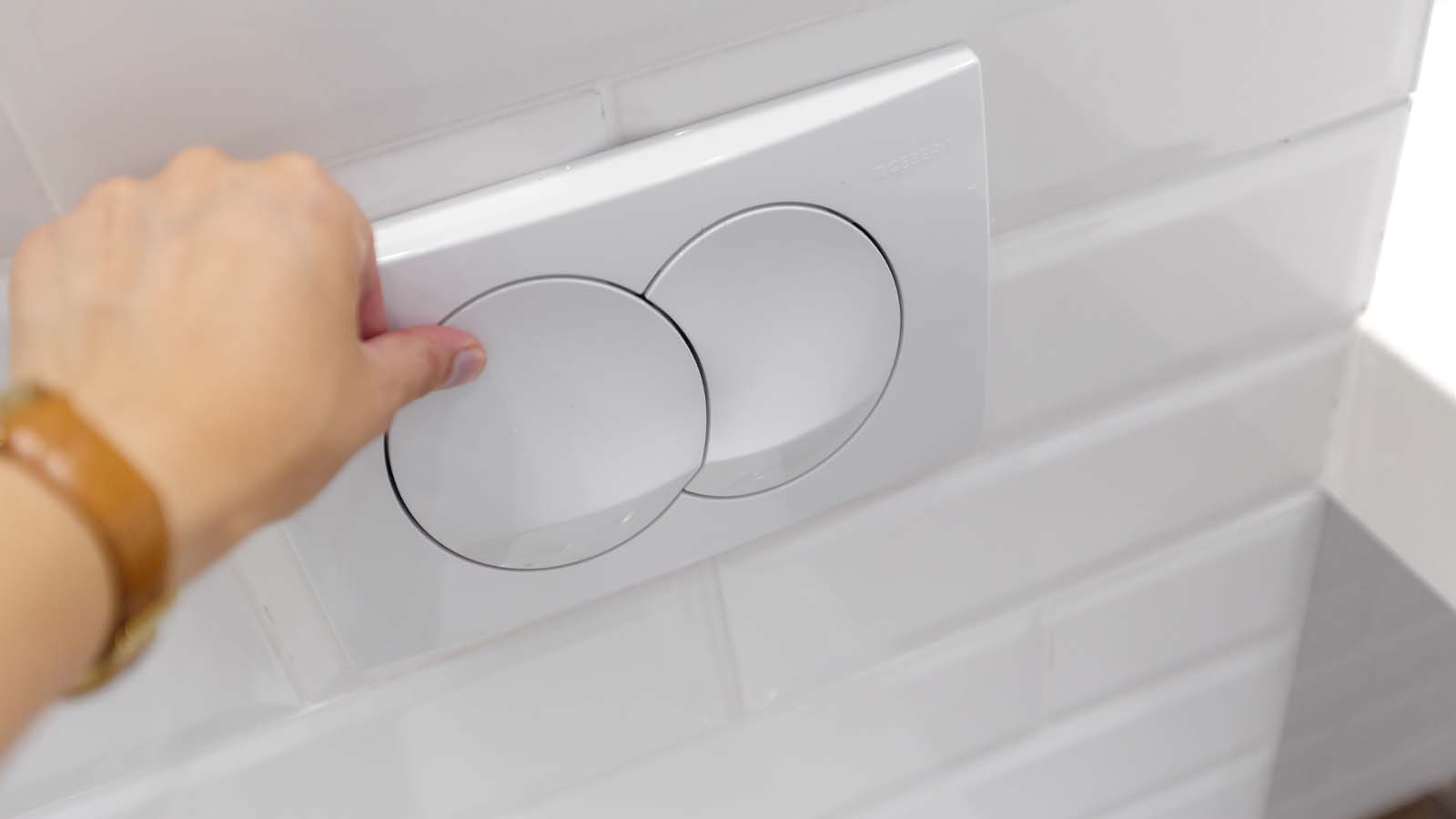
Popular Flush Plate Materials
Once you've confirmed which plate fits your cistern, the fun part begins: choosing how it looks and feels. Flush plates come in several materials, and each strikes a different balance between durability, appearance and price. The material also affects how the finish wears over years of daily pressing, so it's worth a moment's thought rather than defaulting to the cheapest option. Here's how the four most common choices for a modern flush plate compare across US, UK and European bathrooms — from budget-friendly to high-end.
Plastic (ABS)
The most affordable and by far the most common material. Modern flush plates are usually made from tough ABS plastic, which is lightweight, durable and surprisingly hard-wearing for everyday domestic use. Its biggest advantage beyond price is versatility: plastic takes coatings and colours easily, so it's available in a huge range of finishes, including chrome-effect, matte white, gloss black and metallic looks that mimic pricier materials at a fraction of the cost. For most family bathrooms, cloakrooms and rentals, a quality ABS plate does everything you need. The one caveat is that lower-cost chrome-effect coatings can wear or discolour over many years of use, so it's worth choosing a reputable brand even at this price point. Best for: budget-conscious renovations, high-turnover or rental bathrooms, and anyone wanting a specific colour cheaply.
Metal
A clear step up in feel and longevity. Metal flush plates (typically zinc alloy or coated steel) are strong, highly durable and carry a premium, substantial feel the moment you press them — noticeably more solid than plastic. With a quality finish they resist wear and keep their looks for years. This is also the category with the widest choice of on-trend finishes: a chrome flush plate for a classic, go-anywhere look, a brushed brass flush plate or gold for warmth, brushed nickel (especially popular in US bathrooms), a black flush plate in matte or gloss for contemporary and industrial schemes, and gunmetal for something more dramatic. Naturally, metal costs more than plastic. Best for: mid-to-high-end bathrooms where the plate is a visible design feature and you want it to match brassware and fixtures.
Stainless Steel
The workhorse of demanding environments. Stainless steel plates offer excellent corrosion resistance, which is why they dominate commercial washrooms and are increasingly chosen for modern homes. They're hygienic and easy to clean — a quick wipe removes marks and fingerprints — and they're genuinely long-lasting and hard-wearing, standing up to heavy use without corroding in humid conditions. The trade-off is a higher price than plastic and a cooler, more utilitarian aesthetic that some love and others find clinical for a home. Brushed stainless in particular hides fingerprints better than a mirror-polished finish. Best for: commercial and public restrooms, high-traffic family bathrooms, and minimalist modern interiors that suit an industrial edge.
Glass
The premium, design-led choice. Glass flush plates deliver a contemporary, high-end appearance that instantly elevates a bathroom, with a smooth surface that's easy to wipe clean. They come in black, white and coloured options, and are most often paired with minimalist, luxury or boutique-hotel-style bathrooms where the plate is meant to be a subtle statement. Glass is more expensive and, while toughened glass is used and durable in normal use, it can be more vulnerable to a sharp knock than metal or steel. It also shows fingerprints and water spots more readily, so it rewards regular wiping. Best for: luxury and design-focused bathrooms where appearance is the priority and the plate is treated as a finishing flourish.
Quick comparison
|
Material |
Relative cost |
Durability |
Look & feel |
Best suited to |
|
Plastic (ABS) |
£ / $ (lowest) |
Good |
Wide colour choice, lighter feel |
Domestic bathrooms, rentals, budget builds |
|
Metal |
££–£££ / $$–$$$ |
Very high |
Premium, solid; widest finish range |
Design-led mid-to-high-end bathrooms |
|
Stainless Steel |
££ / $$ |
Very high, corrosion-proof |
Hygienic, hard-wearing, industrial |
Commercial washrooms, high-traffic homes |
|
Glass |
£££ / $$$ (highest) |
Good (toughened) |
Sleek, luxurious, contemporary |
Minimalist, luxury and boutique bathrooms |
One reminder to close on: material and finish are the last decision, not the first. However much you love a brushed brass or black glass plate, it still has to match your cistern's brand, model and mechanism — so confirm flush plate compatibility before falling for the finish. Nail the fit, then pick the material that suits your bathroom, your budget and how hard the plate will be used.
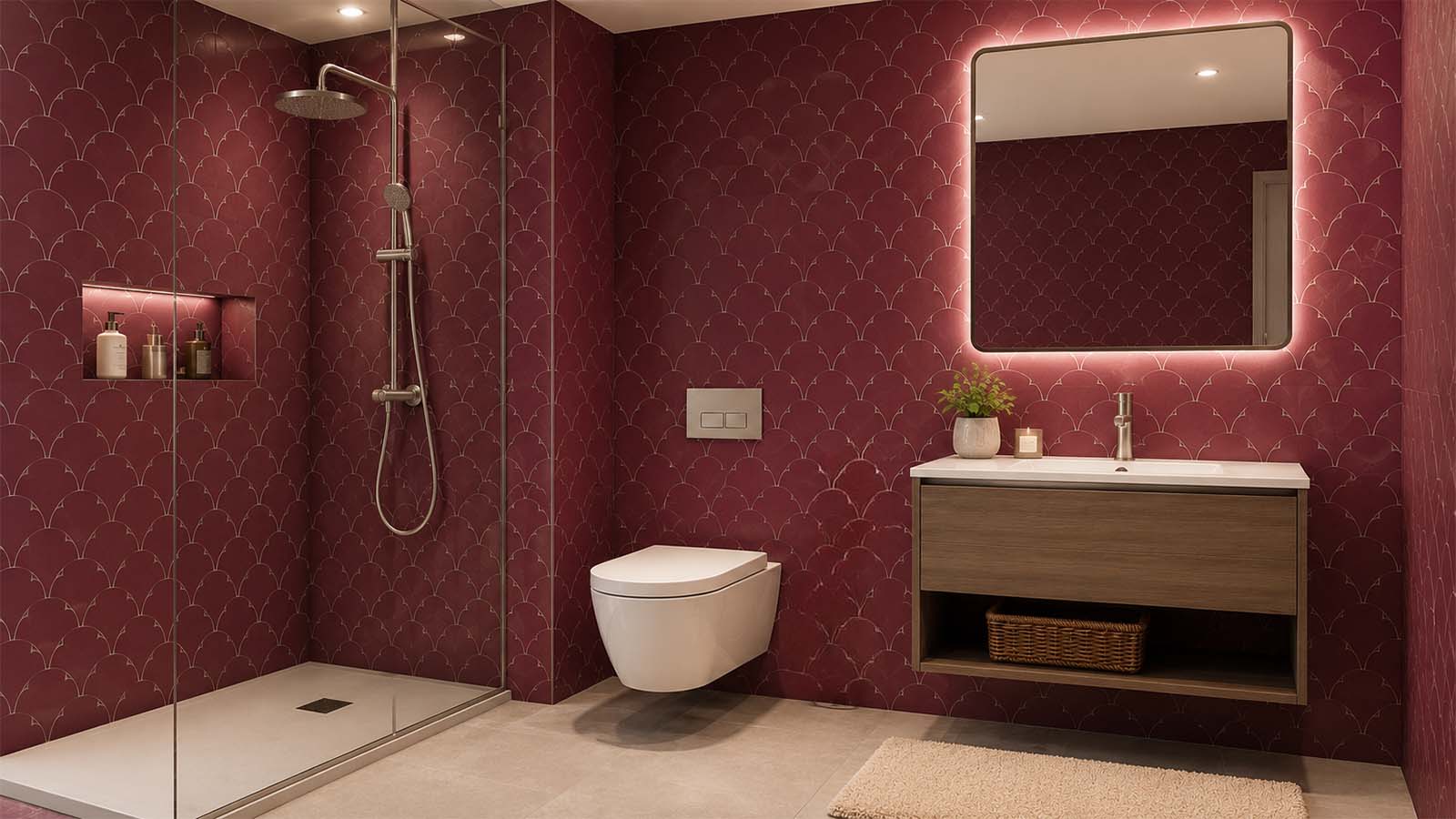
Popular Flush Plate Finishes
With the material chosen, the finish is where your flush plate either disappears into the background or becomes a deliberate design detail. This is a smaller decision than compatibility, but it's the one people actually see every day — so it's worth matching it to your bathroom's style and, ideally, to your taps, shower and handles for a coordinated look. Below are the ten most popular finishes for a modern flush plate across US, UK and European bathrooms, roughly in order from the most versatile to the most statement-making, with a note on which interiors each one suits best.
Chrome — The timeless all-rounder. A polished chrome flush plate is bright, reflective and suits almost any bathroom, from traditional to contemporary, which is exactly why it's the most widely stocked and often the best-value option. It coordinates effortlessly with standard chrome brassware. The only downside is that its mirror surface shows water spots and fingerprints, so it needs a regular wipe to stay gleaming. Best for: anyone wanting a safe, versatile choice that matches existing chrome fixtures.
Satin Chrome — Chrome's understated sibling. A brushed, matte version of chrome that's softer and more contemporary, and crucially hides fingerprints and water marks far better than the polished finish. It gives a modern, low-maintenance look while still coordinating with most fittings. Best for: contemporary bathrooms that want the chrome family without the constant polishing.
Brushed Nickel — A softer, warmer alternative to chrome with a subtle grey-gold tone. Hugely popular in US bathrooms, it hides fingerprints and spots well and flatters both modern and transitional or traditional schemes. It reads as calmer and more refined than bright chrome. Best for: transitional and warm-modern interiors, and homes fitted with brushed-nickel taps and hardware.
Matte Black — The definitive contemporary statement. A matte black flush plate anchors industrial, monochrome, Scandinavian and modern-minimalist bathrooms, standing out boldly against white or grey tiles. It's on-trend across all three markets right now. Practically, matte black hides water spots but can show dust and limescale, so it suits softer water areas or a quick regular wipe. Best for: contemporary and industrial interiors, and rooms with black taps, frames or shower fittings.
Gunmetal — A dark, grey-metallic finish that's a favourite in modern designer bathrooms. It offers the drama of black with a subtle metallic sheen — a statement without going fully matte black. It pairs beautifully with dark or moody colour schemes and other gunmetal or graphite fixtures. Best for: high-end, design-led bathrooms after something distinctive and directional.
Gloss White — Clean, bright and classic. A gloss white plate blends seamlessly with white wall tiles and white sanitaryware, effectively vanishing into the wall for an uncluttered look — ideal for small or bright bathrooms where you don't want the plate to draw the eye. Choose a quality coating, as cheaper gloss whites can discolour slightly over many years. Best for: white-tiled bathrooms and anyone wanting the plate to disappear.
Matte White — A softer, more contemporary take on white. Less reflective than gloss, it suits matte tiles and minimalist Scandinavian schemes, and hides fingerprints better than a glossy surface. It still blends with white sanitaryware but feels more current. Best for: modern minimalist and Scandi-style bathrooms with matte surfaces.
Brushed Brass — Warmth and luxury in one finish. A brushed brass flush plate (sometimes called brushed gold) adds richness and works especially well in luxury, boutique-hotel and art-deco-inspired bathrooms, warming up neutral, dark or green-and-blue schemes. The brushed texture hides marks better than polished brass and has a more understated, on-trend feel. Best for: luxury and boutique bathrooms, and anyone coordinating with brass taps and accessories.
Gold — Bold, glamorous and unapologetically luxurious. Polished gold (often a PVD finish for durability) is richer and shinier than brushed brass, making a real statement in maximalist, art-deco or high-glamour bathrooms. It's a finish for people who want the plate to be seen. Best for: opulent, statement bathrooms where glamour is the goal.
Bronze — Warm, dark and characterful. Bronze and oil-rubbed bronze finishes (particularly popular in US bathrooms) bring a vintage, rustic or farmhouse warmth, pairing naturally with traditional, country and heritage-style interiors. The aged tone lends depth and a lived-in charm. Best for: traditional, rustic and farmhouse bathrooms with warm, earthy palettes.
Which finish suits which style?
|
Bathroom style |
Finishes that work best |
|
Contemporary / minimalist |
Matte black, satin chrome, matte white, gunmetal |
|
Industrial |
Matte black, gunmetal, brushed steel-look |
|
Traditional / classic |
Chrome, brushed nickel, bronze |
|
Luxury / boutique hotel |
Brushed brass, gold, gunmetal |
|
Scandinavian |
Matte white, matte black, satin chrome |
|
Rustic / farmhouse |
Bronze, brushed brass |
|
Small / bright bathrooms |
Gloss white, matte white, chrome |
A couple of finishing tips
For the most polished result, coordinate your flush plate finish with the rest of the room — taps, shower controls, towel rails and door handles. Matching everything gives a calm, cohesive feel; deliberately mixing metals (say, brass with black) can look designer if it's intentional and repeated elsewhere in the room, but random mismatches tend to look accidental. And one last practical reminder that runs through this whole guide: not every finish is offered for every cistern range. Your available finishes depend on what your specific brand and model produce, so confirm the finish you want is actually made for your cistern — and passes the flush plate compatibility check — before you order.
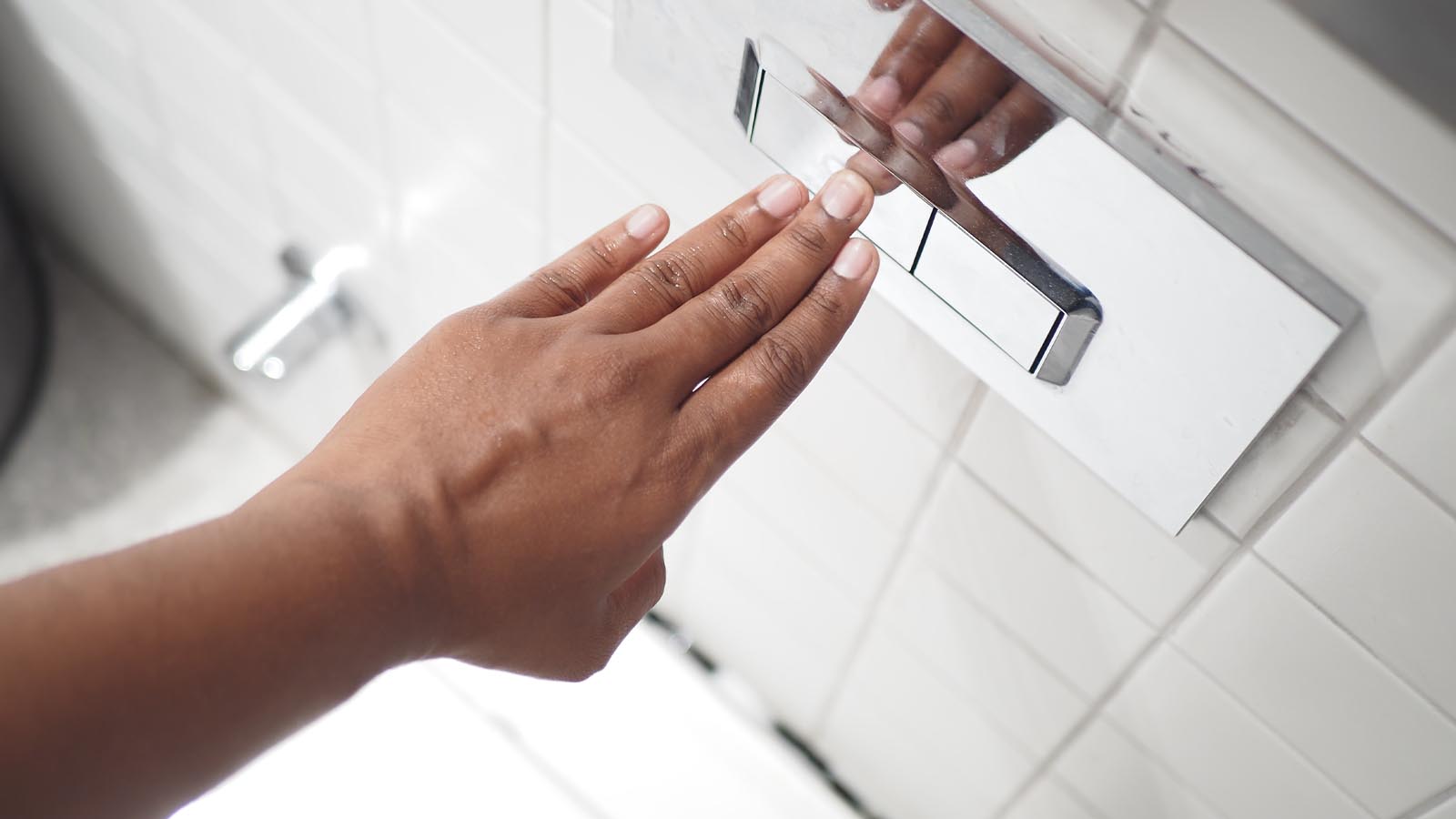
Flush Plate Styles
Beyond size and finish, the style of a flush plate — its shape, button design and overall look — is where it starts to reflect the character of your bathroom. Two plates in the same chrome finish can feel completely different depending on whether they're soft and rounded or sharp and geometric. This is a purely aesthetic choice (function is identical across styles), so it comes down to matching the plate's lines to your bathroom's design language. Here are the most popular flush plate styles for US, UK and European bathrooms, and the interiors each one suits.
Round buttons
Soft, classic and approachable. A round flush plate — usually one or two circular buttons on a rectangular backplate — has a gentle, timeless feel that works across traditional, transitional and softer contemporary bathrooms. The curved buttons are comfortable and intuitive to press, and the shape pairs well with rounded basins, baths and mirrors. Best for: classic and transitional schemes, and rooms with other curved fixtures.
Square buttons
Sharp, structured and modern. A square flush plate with squared or rectangular buttons brings clean, geometric lines that suit contemporary and minimalist bathrooms, and it looks especially crisp against large-format or rectangular tiles. Square styling reads as more architectural and deliberate than round. Best for: modern, minimalist and design-led bathrooms with straight lines and geometric tiling.
Rectangular buttons
A confident, streamlined variation. Rather than two small buttons, some plates use long rectangular or bar-style buttons — often a split bar for dual flush — giving a sleek, horizontal emphasis that feels current and easy to operate. The larger button area is also more accessible. Best for: contemporary bathrooms wanting a clean, tactile, slightly softer take on the square look.
Slimline designs
Function without bulk. Slim flush plate designs sit almost flush with the wall, with minimal depth and a barely-there profile that's ideal for compact bathrooms, cloakrooms and en-suites — and the natural partner to slimline concealed cisterns built for shallow walls. They deliver a neat, understated finish that doesn't crowd a small space. Best for: small bathrooms and anyone wanting the plate to stay subtle.
Frameless designs
Seamless and edge-free. Frameless plates do away with a visible surrounding border, so the plate appears to float against the tile for a clean, integrated look — a favourite in high-end minimalist bathrooms. Some models sit almost level with the wall surface. Worth noting: frameless here describes the plate's appearance, and is separate from whether your cistern itself is a framed or frameless (frame-mounted or frameless-fixing) system, so check both when ordering. Best for: luxury, minimalist and boutique-hotel-style interiors.
Minimalist styles
Quiet by design. Minimalist plates focus on pared-back simplicity — plain surfaces, discreet buttons and no decorative detail — so the plate blends into the wall rather than announcing itself. Often combined with matte finishes or white-on-white schemes, this style suits anyone who wants the flush control to disappear. Best for: Scandinavian, contemporary and minimalist bathrooms where less is more.
Decorative / designer plates
The plate as a feature. At the top end, decorative and designer plates use textured surfaces, patterns, unusual materials (like glass or coloured finishes), backlighting or distinctive shapes to make the flush control a genuine design statement.These carry a higher price but let the plate contribute to the room's personality. Best for: luxury, statement and design-focused bathrooms where the plate is meant to be noticed.
Matching style to your bathroom
|
Bathroom style |
Styles that work best |
|
Traditional / classic |
Round buttons, understated rectangular |
|
Contemporary / modern |
Square buttons, rectangular bars, frameless |
|
Minimalist / Scandinavian |
Minimalist, slimline, frameless |
|
Small bathrooms / cloakrooms |
Slimline, compact minimalist |
|
Luxury / boutique hotel |
Frameless, decorative designer, backlit |
|
Industrial |
Square buttons, matte minimalist |
As with every choice in this guide, style is the enjoyable final layer — but it still sits on top of the fundamentals. The round, square, slim or designer plate you fall for is only an option if it's actually made for your cistern's brand, model and mechanism, so run the flush plate compatibility check first, then choose the style that best fits your bathroom's look. Get that order right and you end up with a plate that fits perfectly and finishes the room exactly the way you pictured it.
Can You Replace a Flush Plate Yourself?
For a straightforward like-for-like swap, replacing a flush plate is one of the more DIY-friendly bathroom jobs — no water needs draining and no wall needs opening, because the plate is simply the removable cover over the cistern. If your old plate has cracked, discoloured or you just fancy a new finish, and you're fitting a replacement flush plate that matches your existing cistern, most confident DIYers can manage it in under half an hour with basic tools. Here's a step-by-step overview of how to replace a flush plate, followed by when it's worth calling a professional.
Before you start, a quick tip: locate your bathroom's water isolation (stop) valve so you know where it is, and have your phone ready to photograph the wiring or rod layout as you go — those photos make reassembly far easier.
1. Remove the existing plate: Flush plates attach in one of a few ways — some lift or clip off, others are held by a hidden frame or screws. Gently ease the plate away from the wall; on many models you'll release a clip or lift the plate up and off, while others require unscrewing a fixing behind a removable button or cover. Take it slowly and don't force it, as plastic clips can snap. Once it's off, you're looking straight into the cistern's access opening.
2. Disconnect the rods or pneumatic tubes: Note which type of mechanism you have, then disconnect the plate from it. On a mechanical system, you'll unhook or unclip the push-rods that link the buttons to the flush valve. On a pneumatic system, you'll gently detach the small air tube(s) from the plate. On an electronic plate, you'll disconnect the wiring — and this is the point to isolate the power if it's mains-connected. Photograph the arrangement first so you can replicate it exactly with the new plate.
3. Check compatibility: This is the make-or-break step, so confirm it before fitting anything. Make sure your replacement flush plate matches the cistern's brand, model/series and mechanism (mechanical, pneumatic or electronic), and that its dimensions match the opening. If you're doing a straight swap of the same model, you're safe; if you're changing to a different plate, this flush plate compatibility check is what stops you discovering mid-job that the new plate won't fit or won't engage the valve. Also check that all the small parts — locking rods, flush rods, back plate — supplied with the new plate are present, and plan to use those rather than the old ones.
4. Install the replacement: Fit the new plate in the reverse order of removal. First reconnect the mechanism — clip the push-rods back onto the valve, reattach the pneumatic tube, or reconnect the wiring, matching your photos. Then align the plate (and its support/back plate) with the opening and the mechanism, and press it gently into position; on many models you'll hear or feel a click as it engages. Secure it with the provided clips or screws, making sure it sits flush and level against the wall. Adjust the rods if the buttons feel too loose or too stiff — most systems allow fine-tuning of rod length.
5. Test the flush: Before you consider the job done, test it thoroughly. Press each button — full and reduced flush on a dual plate — and check the toilet flushes correctly and the buttons return smoothly. Watch that the cistern refills and then stops (no continuous running), and confirm there's no water leaking around the mechanism. If a button sticks, doesn't flush, or the cistern keeps running, remove the plate and re-check the rod or tube connection and adjustment. A correctly fitted plate operates cleanly and quietly.
When professional help is useful
A like-for-like plate swap is well within reach for a competent DIYer, but there are situations where a plumber is the smarter call:
You can't identify the cistern or find a compatible plate — a specialist can source or match parts and avoid a costly mistake.
The problem is inside the cistern, not the plate — continuous running, weak flushing or leaks usually point to a worn flush or fill valve, which is a bigger job than swapping the visible plate.
It's an electronic (sensor) plate — anything involving mains wiring should be handled by a qualified electrician or plumber, in line with local regulations.Even the best flush plates run into trouble eventually — buttons stick, plates work loose, and after years of daily use, plastic parts wear out. The good news is that many flush plate faults are minor and fixable, and knowing which is which helps you decide between a quick repair and a replacement flush plate. Below are the most common problems, what usually causes each one, and how to approach it — followed by guidance on when replacing beats repairing. (One thing worth ruling out first: if the toilet keeps running or won't refill, the fault is often inside the cistern — a worn flush or fill valve — rather than the plate itself.)
Flush plate not working at all - If pressing the button does nothing, the link between plate and valve has usually failed. On a mechanical plate, a push-rod may have come loose, slipped off or snapped; on a pneumatic plate, the air tube may have detached or split; on an electronic plate, check the power supply or batteries first. Remove the plate and inspect the connection — often it's simply a rod that's popped off and can be reseated. If a part is broken rather than dislodged, it needs replacing.
Sticking buttons - A button that presses down but feels sluggish or jams is usually caused by limescale build-up (common in hard-water areas), grime around the button, or a misaligned or over-tight push-rod. Cleaning around the buttons and mechanism often frees it; if not, the rod may need adjusting or the button mechanism may be worn. Sticking that returns quickly after cleaning usually points to a worn plate that's due for replacement.
Loose plate - A plate that wobbles or sits proud of the wall generally has a fixing problem — a clip that's no longer gripping, a loosened screw, or a support bracket that's shifted. Removing and re-seating the plate, and tightening or re-engaging the fixings, usually solves it. If the mounting clips themselves are broken or worn smooth, they won't hold reliably and a new plate is the fix.
Broken push rods - The push-rods that connect a mechanical plate to the valve are among the most common failure points — they can crack, snap or wear out with repeated use. A broken rod means the button can't reach the valve, so the flush fails. Rods are sometimes available as spares for branded cisterns, but they're often supplied with a new plate, so replacing the plate (and using its fresh rods) is frequently the simplest route.
Damaged pneumatic tubes - On pneumatic systems, the small air tube can perish, kink or split over time, or work loose at either end — which stops the air pressure reaching the valve, so nothing flushes. Check whether the tube has simply detached (reconnect it) or is genuinely damaged (replace it). A cracked or perished tube needs a new one, and these are usually matched to the specific system.
Cracked or damaged faceplate - Cracks, chips or discolouration on the visible plate are cosmetic but hard to ignore, and a crack can worsen with each press. There's no reliable repair for a cracked faceplate — this is a clear-cut case for a replacement flush plate, and a chance to update the finish while you're at it.
Buttons that won't return - A button that stays pressed in after flushing usually means a weakened or broken return spring, a jammed rod, or debris in the mechanism. Cleaning may help if it's grime; but a failed spring or worn button mechanism can't usually be repaired, and points to replacing the plate.
Incomplete or weak flush - If the flush starts but doesn't fully clear — or a dual-flush button releases too little water — the cause may be a plate/rod not travelling far enough (an adjustment issue), or it may be the flush valve inside the cistern. Try adjusting the rod length first; if the plate is operating fully but the flush is still weak, the problem is likely the cistern's valve, not the plate, and that's a different (usually plumber-level) repair.
When to replace rather than repair
As a rule, reseat and clean first, replace when parts are worn or broken. Repair makes sense when the fix is simple and non-destructive — a rod that's popped off, a loose fixing, limescale around a button, batteries in an electronic plate. Lean toward a full replacement when:
The faceplate is cracked, chipped or badly discoloured — cosmetic damage has no real repair.
Push-rods, springs or clips are broken or worn — these often come only with a new plate anyway, making replacement the cleaner, cheaper option once you factor in your time.
The same fault keeps returning after cleaning or reseating — a sign the mechanism is worn out.
The plate is old and spares are hard to find — chasing individual parts for an ageing or discontinued model rarely pays off.
You're already unhappy with the look — if it's failing and dated, replacing solves both at once.
And a reminder that ties back to the rest of this guide: if you do replace, the new plate must match your cistern's brand, model and mechanism, so run the flush plate compatibility check before ordering. For anything that turns out to be inside the cistern — a failing valve causing running water, weak flushing or leaks — the plate isn't the culprit, and that repair is usually best handled by a professional. This holds true across the US, UK and Europe, though local plumbing regulations and available spares vary by region.
Features Worth Looking For
Two flush plates can look identical on a product page yet feel completely different in daily use — the difference is in the details. Beyond fit, finish and style, a handful of practical features separate a plate you'll appreciate every day from one that merely does the job. Here are the features worth looking for when comparing options, and why each one matters for US, UK and European buyers.
Soft-touch buttons - How a plate feels to press is something you'll notice every single day. Soft-touch buttons operate with a light, smooth, satisfying action rather than a stiff or hollow click, and they tend to be gentler and quieter in use. This is a hallmark of better-quality plates, and it's especially worth prioritising in bathrooms used by children, older adults or anyone who values effortless operation.
Anti-fingerprint coatings - Fingerprints and water spots are the enemy of a good-looking plate, particularly on darker and metallic finishes. Anti-fingerprint (or fingerprint-resistant) coatings help the surface shrug off smudges so it stays looking clean between wipes. If you've set your heart on matt black, gunmetal or a polished metal finish, this coating makes a real difference to how the plate looks day to day.
Scratch-resistant finishes - A flush plate is touched constantly, so a finish that resists scratching and scuffing will keep its looks for years rather than dulling early. Scratch-resistant coatings (and durable finishing methods such as PVD on metal plates) protect the surface from everyday wear and the occasional knock from cleaning. It's a quiet feature that directly affects how long the plate stays looking new.
Easy-clean surfaces - Bathrooms demand regular cleaning, so a smooth, non-porous, easy-clean surface is a genuine convenience. Glass and quality metal plates typically wipe down in seconds, and finishes designed to resist limescale and soap residue cut down on scrubbing — a real bonus in hard-water areas common across much of the US, UK and Europe. Fewer crevices and seams also mean fewer places for grime to gather.
Tool-free installation - Some modern plates are designed to clip or push into place without screws or special tools, which makes both fitting and future maintenance far simpler — you can pop the plate off to access the cistern in seconds. If you're a DIYer or just want easy access for servicing, tool-free installation is a welcome feature (though always follow the manufacturer's instructions, as some models still use secure fixings).
Adjustable push rods - On mechanical plates, adjustable push rods let you fine-tune how far the buttons travel and how they engage the flush valve — so you can dial in a light, reliable press and correct any stiffness or under-travel. This adjustability makes installation more forgiving and helps the plate operate cleanly on your specific cistern. It's a practical detail that prevents a lot of common button feels wrong niggles.
Water-saving dual flush - One of the most valuable features of all. A water-saving dual flush plate gives you a full and a reduced flush, cutting the water used on most flushes — good for your bills and the environment alike. As covered earlier, look for regional efficiency markers: WaterSense labelling in the US (no more than 1.28 gallons per flush) and modern low-volume dual-flush cisterns (around 6/3 litres) across the UK and Europe. Just remember the plate can only deliver dual flush if the cistern's valve supports it, so confirm that as part of your flush plate compatibility check.
Which features matter most?
Not every feature is essential for every buyer, so prioritise based on your situation:
Busy family or high-use bathroom → soft-touch buttons, scratch-resistant and easy-clean surfaces for durability and low upkeep.
Dark or metallic finish chosen → anti-fingerprint coating to keep it looking sharp.
DIY installation or easy maintenance access → tool-free installation and adjustable push rods.
Cutting water bills / eco priority → water-saving dual flush with the right regional efficiency label.
Peace of mind and compliance → the relevant regional certification (WRAS / WaterSense / cUPC / CE) from a trusted brand.
Prioritising the best flush plate for your needs is about matching these features to how you actually live — but as always, they only count once you've confirmed the plate fits your cistern's brand, model and mechanism. Get the fit right first, then let features like these guide you to the plate that's genuinely nicer to own.