What Is a Toilet Cistern?
A toilet cistern is the water tank that stores and releases the water used to flush a toilet. In the UK and Europe it's called the cistern; in the US it's usually called the toilet tank — the same component under a different name. Whether it sits on view above the pan or hides inside the wall, its job is identical: hold a measured volume of water and release it in a controlled rush to clear the bowl.
That one component quietly controls how your toilet performs every day — how powerfully it flushes, how much water it uses, how quiet it is, and how easy the whole unit is to clean and repair. Which is exactly why it's worth understanding before you buy.
How a modern toilet cistern works
Every cistern relies on two valves working in sequence. When you flush, the flush valve (in older UK systems, a siphon) opens and empties the stored water into the pan. As the level drops, a float falls with it and opens the fill valve (also called the inlet valve), which refills the tank to a preset line and then shuts off automatically. It's a simple, self-regulating loop that's been refined for well over a century.
The big upgrade in a modern toilet cistern is dual-flush. Instead of one fixed volume, you get two buttons — a full flush for solids and a reduced flush for liquids. A typical modern full flush uses around 6 litres (1.6 US gallons), while the reduced flush drops to roughly 3–4 litres (0.8–1.1 US gallons). In the US, WaterSense-labelled models cap the full flush at 1.28 US gallons (4.8 litres) — about 20% below the federal 1.6-gallon standard. Older cisterns, by comparison, poured through 9–13 litres (2.4–3.4 gallons) on every flush, which is why swapping to a modern unit is one of the easiest ways to cut household water use.
Why choosing the right cistern matters
The cistern you choose shapes far more than the flush. It affects four things at once:
- Appearance — a visible tank reads traditional; a hidden one gives you a clean, minimalist wall.
- Installation — some cisterns bolt straight onto the pan, while others need a frame built into the wall before tiling.
- Maintenance — how quickly you (or a plumber) can reach the working parts when something needs adjusting.
- Water efficiency — a modern dual-flush cistern can roughly halve the water an older toilet wastes.
What Is a Concealed Toilet Cistern?
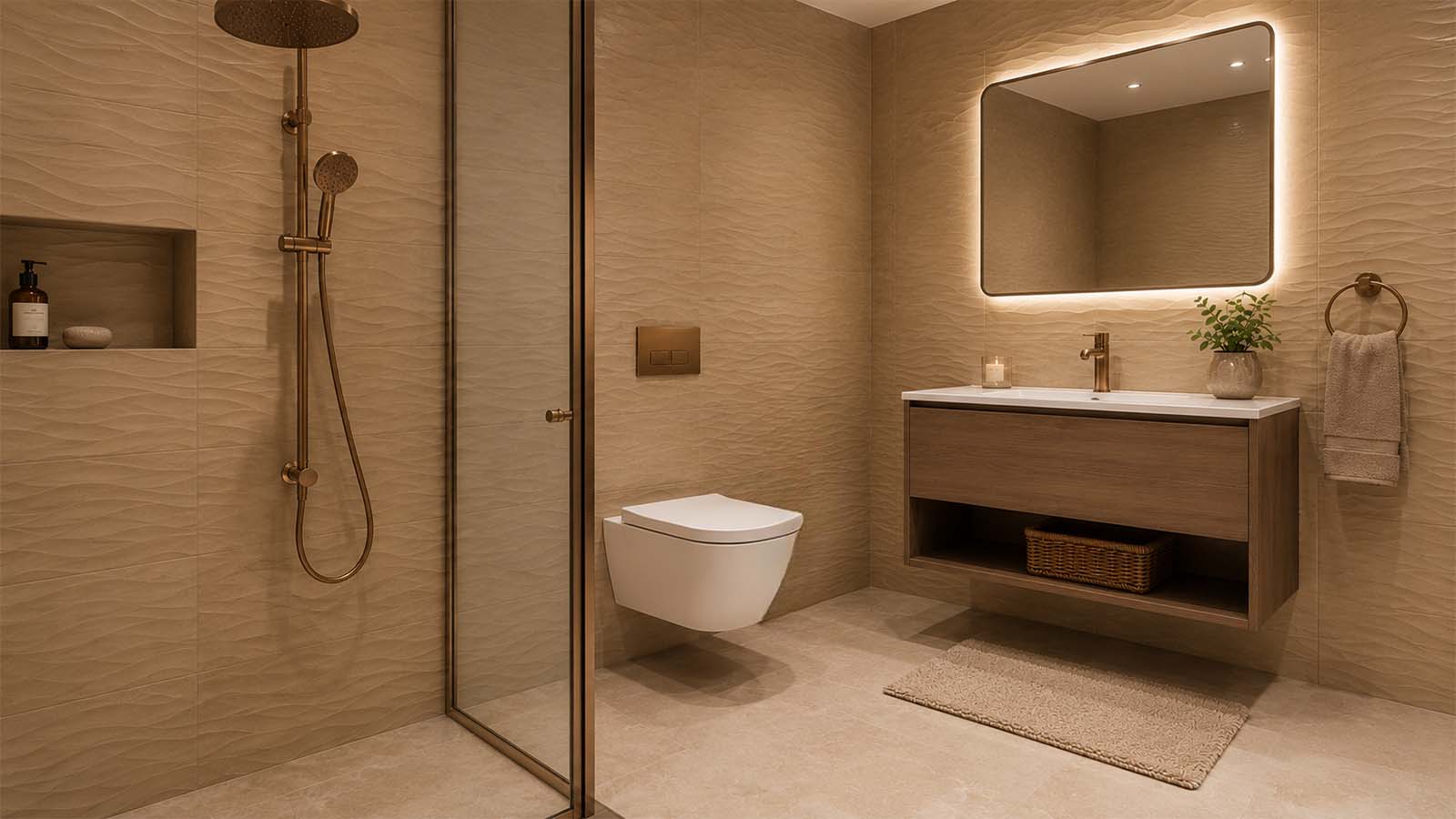
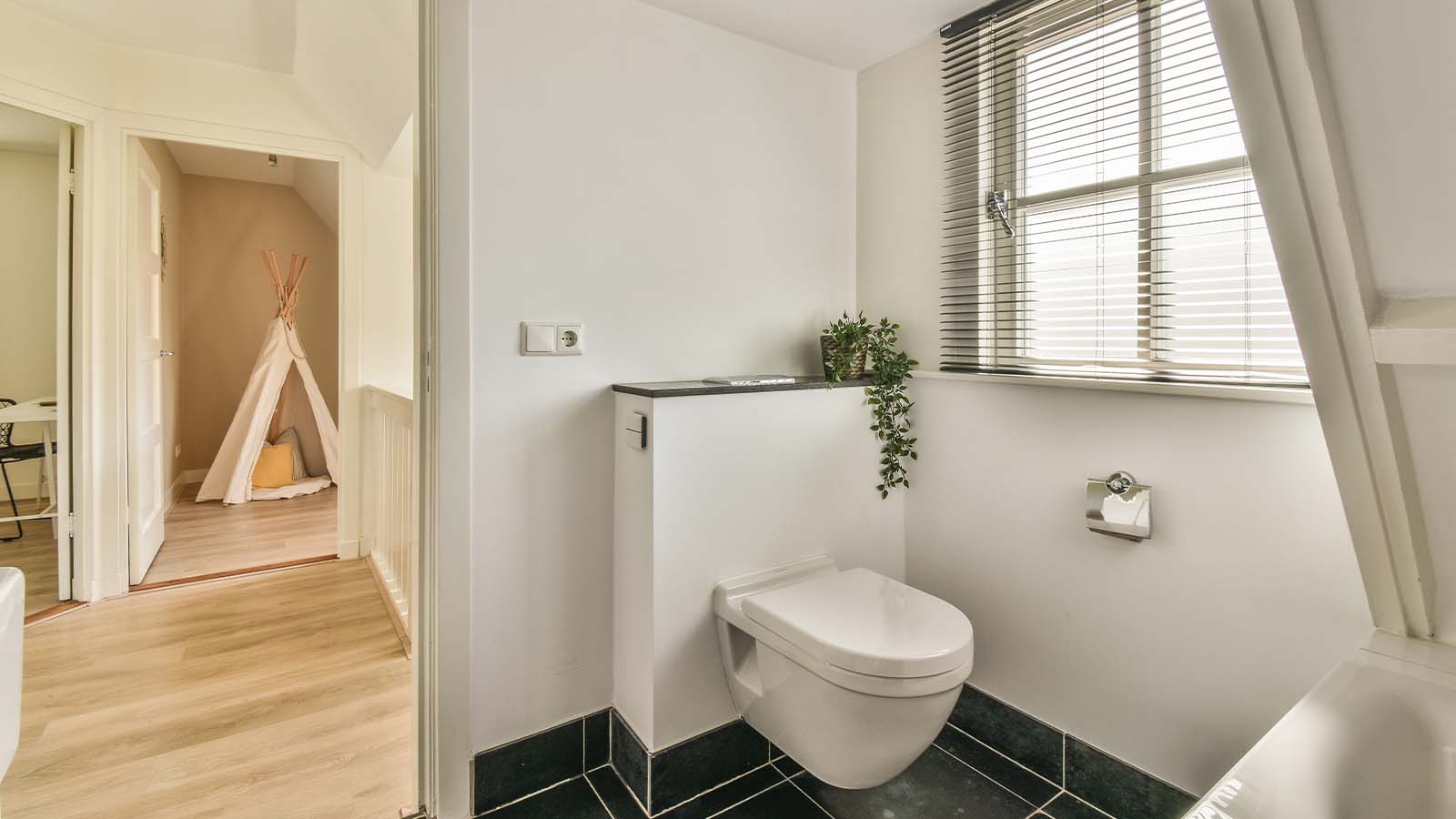
A concealed toilet cistern is a flushing tank that's hidden from view — built into the wall, tucked inside a furniture unit, or mounted on a supporting frame — so the only part left on show is the flush plate. In the US it's often called an in-wall toilet cistern or in-wall tank; in the UK and Europe, a concealed or hidden cistern. Whatever the name, the water storage, valves and pipework all sit out of sight behind the finished wall.
This is the look you'll recognise from modern hotels, luxury en-suites and contemporary new-builds: a toilet with no visible tank, no exposed pipes, and a single sleek plate on the wall. It has become the default choice for minimalist bathroom design across the US and Europe.
Typical installations
There are three common ways an in-wall toilet cistern is fitted:
-
On a WC frame — a self-supporting, powder-coated steel frame fixed to the floor and studs, then boarded and tiled over. This is the standard method for stud or drywall walls and the go-to for wall-hung toilets. In the US, these frames are sized for 2x4 or 2x6 wall construction.
-
Inside a solid wall — the cistern is recessed into a brick or block wall, or a purpose-built false wall, then plastered and tiled over.
-
Inside a furniture unit — the cistern hides within a vanity or back-to-wall furniture unit rather than the wall itself, which suits renovations where opening up the wall isn't practical.
Common materials
The parts you never see are built to last decades:
-
The cistern body is almost always HDPE (high-density polyethylene), blow-moulded in a single seamless piece so there are no joints to leak, and it won't corrode like metal.
-
The frame is self-supporting, powder-coated steel, typically rated to hold around 400 kg (880 lbs) — far more than any user will ever put on it.
-
The flush plate is the one design element on show, available in ABS plastic, glass, or brushed and polished metal, in a wide range of finishes and colours to match your bathroom.
Compatible toilets
A concealed cistern only works with two pan types: wall-hung toilets (which appear to float, with the frame carrying the weight) and back-to-wall toilets (which sit on the floor, flush against the wall). A standard close-coupled toilet can't use one — so this is worth confirming before you buy.
Access for servicing
The most common worry about a hidden tank is what happens if it breaks inside the wall? — and it's largely unfounded. On quality systems, removing the flush plate gives tool-free access to the fill and flush valves, so a plumber can service or adjust everything through that opening without disturbing a single tile.
Taken together, these concealed toilet cistern benefits — the hidden tank, the minimalist wall, and surprisingly easy servicing — are what have made the in-wall system the standard for modern bathroom design. We'll look at each benefit in detail next.
What Is an Exposed Toilet Cistern?
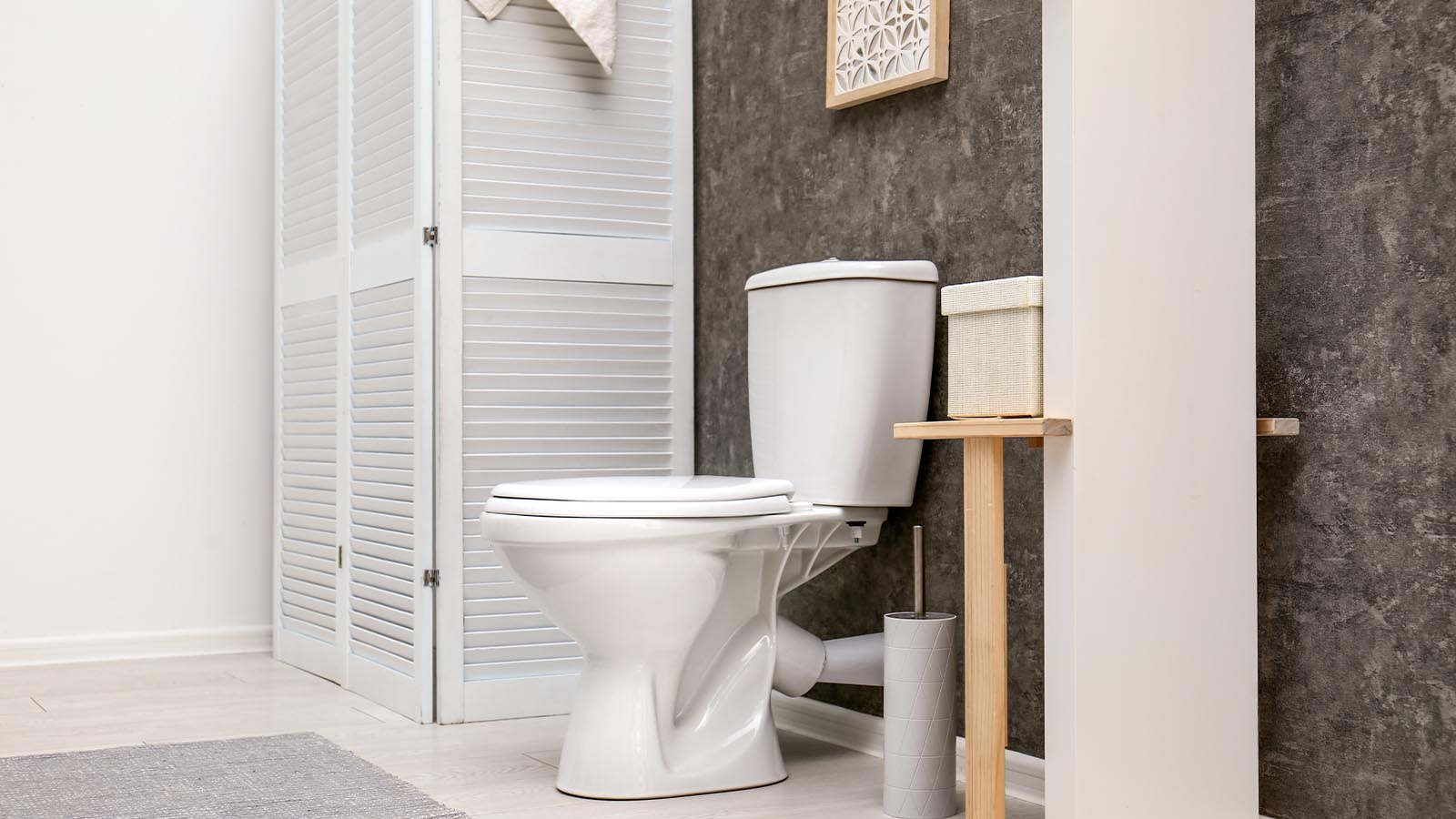
An exposed toilet cistern is the familiar, visible water tank that sits in full view above or behind the toilet pan. It's the traditional toilet cistern most people picture when they think of a toilet — the tank you can see, touch, and simply lift the lid off. In the US it's usually just called the toilet tank. Because nothing is hidden, every part of the flushing system sits right there on the wall or on top of the pan.
This is the most widely installed cistern type in homes across the US, UK and Europe, and it stays popular for good reason: it's affordable, endlessly available, and straightforward to fit and repair.
Types of exposed cistern
Exposed cisterns come in three main configurations:
-
Close-coupled — the cistern sits directly on top of the pan, bolted to it as one unit. This is by far the most common setup in modern homes (in the US it's known as a two-piece toilet). A one-piece toilet is a variation where the tank and bowl are moulded as a single seamless ceramic casting — still an exposed tank, just integrated.
-
Low-level — the cistern is mounted on the wall a short distance above the pan and joined to it by a short, wide flush pipe. It gives a traditional look that suits period and cottage-style bathrooms.
-
High-level — the cistern is fixed high up near the ceiling, connected by a long flush pipe and operated by a pull chain. This is the classic Victorian throne style (sometimes called a high-tank toilet in the US), where the extra height once gave the flush more force.
Whichever style you choose, the cistern is usually made from the same ceramic (vitreous china) as the pan so the two match, with the working valves housed inside.
Easier access for repairs
The biggest practical advantage of an exposed cistern is serviceability. If the fill valve sticks, the flush weakens, or a washer perishes, you simply lift off the ceramic lid and every component — the fill valve, the flush valve or siphon, and the float — is right in front of you. There are no wall panels to remove, no tiles to lift, and no frame to work around. Many minor faults are a genuine DIY job, and for a plumber it's a fast, low-cost visit.
Common in family homes and renovations
Because a close-coupled toilet bolts straight onto the existing floor waste and water supply, it's the natural choice for family homes and renovation projects. Swapping an old toilet for a new one is quick, needs no wall alterations, and keeps costs down — which is why exposed cisterns dominate in busy households and in any renovation where speed, simplicity and budget matter more than a hidden-tank finish.
Side-by-Side Comparison
Concealed vs Exposed Toilet Cistern: Side-by-Side Comparison
Before weighing up which toilet cistern is best for your bathroom, it helps to see the two options directly against each other. This concealed vs exposed toilet cistern comparison breaks down the nine factors that matter most — from appearance and space to cost, maintenance and water efficiency — so you can quickly spot which type fits your priorities.
|
Feature |
Concealed Cistern |
Exposed Cistern |
|
Appearance |
Modern, minimalist |
Traditional or classic |
|
Space saving |
Excellent |
Moderate |
|
Cleaning |
Easier around the toilet |
More surfaces to clean |
|
Installation |
More complex |
Simpler |
|
Maintenance |
Access via flush plate |
Fully accessible |
|
Initial cost |
Higher |
Lower |
|
Repair costs |
Can be higher |
Usually lower |
|
Noise |
Often quieter |
Slightly louder |
|
Water efficiency |
Excellent |
Excellent (modern models) |
How to read this comparison
That table captures the core concealed cistern advantages and disadvantages at a glance, but a few points are worth putting numbers to:
-
Space saving is real, not marketing. A wall-hung toilet with a concealed cistern typically projects around 10–15 cm (4–6 in) less from the wall than a close-coupled exposed suite. In a small bathroom or cloakroom, that reclaimed floor space genuinely changes how the room feels.
-
The cost gap is upfront and at install. A concealed system costs more to buy and needs a frame roughed into the wall before tiling, which adds labour. An exposed close-coupled toilet bolts straight onto your existing waste and water supply. Across a multi-bathroom project, that difference compounds.
-
Maintenance and repair aren't the same row twice. Day-to-day servicing on a good concealed system is easy — the flush plate pops off for tool-free access to the valves. It's the rare structural fault that can cost more, since it may mean opening the wall. An exposed cistern is simply lift-the-lid accessible for everything.
-
Noise favours concealed. Because the wall cavity absorbs sound, concealed systems run noticeably quieter — some optimised designs are over 30% quieter in operation. Worth weighing for an en-suite next to a bedroom.
-
Water efficiency is a tie, so don't decide on it. Both types use the same modern dual-flush valves — roughly 6 litres / 3 litres (1.6 / 0.8 US gallons), or 1.28 US gallons on WaterSense-labelled models. Efficiency comes down to the toilet you choose, not whether the tank is hidden.
In short: concealed wins on looks, space and quiet; exposed wins on cost, simplicity and repair access. The rest comes down to your bathroom and budget.
Advantages of Concealed Toilet Cisterns
The concealed cistern advantages go well beyond looks. Hiding the tank in the wall changes how the whole bathroom looks, feels, cleans and sounds — which is why the concealed toilet cistern benefits below have made in-wall systems the standard for modern bathroom design across the US and Europe.
A modern, minimalist look. With the tank and all its pipework hidden, the wall behind the toilet reads as one clean, uninterrupted surface — just the pan and a single flush plate on show. This is the defining feature of a modern toilet cistern and the reason concealed systems anchor almost every contemporary bathroom scheme. Nothing competes visually, so your tiling, fittings and lighting take centre stage.
Hidden pipework, cleaner lines. No exposed cistern body, no visible supply pipe, no awkward gap behind the tank collecting dust. Stripping out that visual clutter is what gives the room its calm, uncluttered feel and makes even a simple bathroom look considered and high-end.
Saves visual space and makes small bathrooms feel bigger. A wall-hung toilet paired with a concealed cistern projects around 10–15 cm (4–6 in) less from the wall than a close-coupled suite, and with the floor visible beneath a floating pan, the eye reads more open floor area. That's why a concealed cistern for a small bathroom, cloakroom or en-suite is one of the most effective ways to make a tight space feel larger.
Far easier floor cleaning. This is the practical benefit people underrate. With a wall-hung toilet there's no pedestal meeting the floor and no pipework to clean around — you can run a mop straight underneath the pan in a single pass. Fewer crevices means less room for dust, grime and bacteria to gather, so the whole area stays hygienic with less effort.
Quieter operation. The wall cavity absorbs much of the sound of flushing and refilling, so concealed systems run noticeably quieter — some optimised designs are over 30% quieter than a standard cistern. For an en-suite sharing a wall with a bedroom, or a downstairs cloakroom off an open-plan living space, that quiet is a genuine everyday benefit.
A luxury, high-end finish. Concealed systems are the look of boutique hotels and high-spec new-builds, and buyers recognise it. Beyond the immediate impact, the flush plate becomes a design detail in its own right — available in glass, brushed or polished metal and a range of finishes — letting you tie the toilet into the wider scheme. Premium fixtures like this can also lift a bathroom's perceived value at resale.
Adjustable, comfortable height. Because a wall-hung pan fixes to the frame rather than the floor, it can be mounted at whatever height suits the household — a genuinely useful option for taller users or for accessibility (what's known as comfort-height or ADA-height in the US).
Concealed cisterns aren't the right answer for every bathroom — cost and installation are real trade-offs, which we cover next — but where a modern, minimalist, space-saving finish is the goal, the advantages are hard to beat. If you've decided a concealed system is right for you, our guide on how to choose the right concealed toilet cistern walks through frames, flush plates and sizing in detail.
Disadvantages of Concealed Toilet Cisterns
A fair look at concealed cistern advantages and disadvantages means being just as clear about the trade-offs as the benefits. Concealed systems are excellent, but they aren't the right fit for every bathroom or every budget — and knowing the drawbacks upfront is what lets you plan around them rather than be caught out mid-project.
Higher upfront cost. A frame-and-cistern system costs more than a standard close-coupled suite, and the flush plate is very often a separate purchase on top — especially designer glass or metal plates. Budget for the concealed toilet system as a whole, not just the cistern.
More planning required. A concealed cistern has to be designed in before the walls go up, because it's roughed into the wall before boarding and tiling. That makes it a natural fit for new-builds and full renovations (walls back to studwork), but a poor fit for a quick like-for-like swap. You also need enough wall depth: a standard frame is around 145 mm (5.7 in) deep, though slim frames down to roughly 85 mm (3.3 in) exist for shallow walls. If you're building a false wall to house it, that depth eats into the room.
Flush plate compatibility. The plate isn't universal. You can't freely mix brands, and if you're tempted by a cheap unbranded cistern, sourcing a compatible plate (or spare parts) later can be genuinely difficult.
Potentially higher labour costs. More skilled work is involved: mounting and levelling the frame, fixing the bracket that carries a wall-hung pan's load, roughing in before tiling, then returning to fit the plate afterwards. It's a two-stage job across plumber and tiler rather than a single straightforward install, and that shows up in the labour bill.
Some repairs can take longer. Day-to-day servicing is easy — the flush plate pops off for tool-free access to the valves. But the occasional structural fault, like a cracked tank body or a failure deep in the frame, can mean opening up the wall, which is slower and costlier than lifting a ceramic lid. Choosing a reputable brand with decades of spare-parts availability keeps this risk low. Our guide to common concealed toilet cistern problems and how to fix them walks through the faults worth knowing.
The access panel must stay reachable. Because the flush plate is your only way in, it can't be tiled over, boxed in, or blocked. If the cistern sits inside a furniture unit or back-to-wall cistern unit, that removable panel needs to stay accessible too — so don't build fixed cabinetry or shelving in front of it. Plan the service access at design stage, not after the tiling's done.
No manual fill if the water's off. A small one, but worth knowing: with no lid to lift, you can't tip a bucket of water in to flush during a supply shut-off, the way you can with an exposed tank.
The balanced verdict: for most people planning a renovation or new-build, none of these are dealbreakers — they're reasons to plan properly and budget realistically, not reasons to rule concealed cisterns out. The trade-off is straightforward: you pay a little more, and plan a little more carefully, in exchange for the look, the space and the quiet. It's the quick, low-cost swap scenario where an exposed cistern usually makes more sense — which brings us to its advantages.
Advantages of Exposed Toilet Cisterns
If concealed cisterns own the modern, minimalist end of the market, exposed cisterns win on practicality — and that's exactly why they remain the most common choice in homes across the US, UK and Europe. The exposed toilet cistern benefits below aren't consolation prizes for a smaller budget; for a lot of households they're the deciding factors.
Lower purchase cost. An exposed close-coupled toilet is typically the most affordable complete suite you can buy, with no separate frame and no separately-priced flush plate to add on. Across a multi-bathroom home or a rental property, choosing exposed over concealed can save a meaningful amount before installation even begins.
Easier, faster installation. A close-coupled suite bolts straight onto your existing floor waste and water supply — no frame to mount and level, no roughing-in before tiling, no return visit to fit a plate. It's a single, self-contained job, which means fewer hours of labour and a lower fitting bill. For most standard bathrooms it's about as simple as plumbing gets.
Simple, lift-the-lid maintenance. Every working part sits inside a tank you can open in seconds. If the flush weakens or the fill valve plays up, you lift off the ceramic lid and the fill valve, flush valve or siphon, and float are all right there — no panels to unscrew, no tiles to lift, no frame to reach around. Fault-finding is quick and obvious.
A wide range of readily available parts. Because exposed cisterns have been the standard for generations, spares are stocked in every plumbers' merchant, hardware shop and DIY store. Washers, valves, flush mechanisms and buttons are cheap, standardised and easy to find — you're never hunting for an obscure brand-specific component, and you're never left waiting days for a part to arrive.
Genuinely DIY-friendly repairs. This is a real advantage of an exposed cistern: many common faults — a running fill valve, a worn flapper or washer, a weak flush — are well within reach of a confident homeowner with basic tools. That means no call-out fee for minor jobs and a repair you can often sort the same afternoon, rather than waiting on a plumber.
Ideal for replacement projects. Swapping a tired old toilet for a fresh one is one of the most common bathroom jobs there is, and an exposed cistern is built for it. Because it connects to the plumbing that's already in place, there's no need to open walls or alter the room — you're simply removing one unit and fitting another. Quick, clean and low-disruption.
Traditional and period styling options. Exposed doesn't mean plain. Beyond the standard close-coupled look, low-level and high-level cisterns (including chain-pull throne styles) let you create an authentically traditional, Victorian or cottage-style bathroom that a hidden tank simply can't. For period properties and classic schemes, a visible cistern is often the right aesthetic choice, not a compromise.
For anyone who values cost, simplicity, easy repairs and a quick, low-fuss install — or who wants a traditional look — the exposed cistern remains hard to beat. The trade-off, of course, is the more traditional appearance and the extra surfaces to keep clean, which we'll cover next.
Disadvantages of Exposed Toilet Cisterns
No cistern type is perfect, and a fair comparison means being clear about where exposed cisterns fall short. None of these are performance problems — an exposed cistern flushes just as reliably as a concealed one — but they're worth weighing if a sleek, contemporary finish is your goal.
Takes up more visual space. The tank is on full view and a close-coupled suite projects roughly 10–15 cm (4–6 in) further into the room than a wall-hung toilet, with a full pedestal running down to the floor. In a generous bathroom that's a non-issue, but in a small cloakroom or en-suite, a visible cistern makes the space feel more filled than a hidden tank would.
Pipework may be visible. The supply pipe feeding the cistern is usually on show, and on low-level and high-level styles the flush pipe between tank and pan is a visible feature too. Neatly run, it's fine — but it's one more element interrupting the wall. Mitigation: a back-to-wall exposed suite conceals the pipework behind the pan and against the wall, tidying up much of this.
Harder to achieve a minimalist look. This is the real trade-off. However tidy the installation, a visible tank and its pipework can't give you the seamless, single-flush-plate wall of a concealed system. If a strictly minimalist, contemporary scheme is what you're after, an exposed cistern sets a ceiling on how streamlined the room can look.
More surfaces to clean. A visible cistern adds surfaces and crevices that a hidden one doesn't: the tank exterior, the awkward gap behind it, the seam where the cistern meets the pan, and the base of the pedestal against the floor. Dust and grime gather in these spots, and reaching behind the tank is fiddly. Mitigation: one-piece (fully skirted) and back-to-wall designs cut down the crevices and close off the gap behind, making cleaning noticeably easier than on an older-style close-coupled unit.
Can be slightly noisier during refilling. With the tank and valves out in the open, there's no wall cavity to absorb the sound of flushing and refilling, so both are a little more audible than with a concealed system. It's a minor point in a family bathroom, but more noticeable in a quiet en-suite that shares a wall with a bedroom. Mitigation: a modern quiet-fill (bottom-entry) valve reduces the refill hiss considerably, narrowing the gap with a concealed setup.
The balanced verdict: an exposed cistern's downsides are almost entirely about appearance and a little extra cleaning — not reliability, cost or ease of repair, where it actually leads. For many households, that's a very fair trade. And as the mitigations above show, choosing a back-to-wall or one-piece design with a quiet-fill valve closes much of the gap with a concealed system while keeping the lower cost and easy access. Which type comes out ahead really depends on what you're optimising for — so let's turn to how to make that decision.
Which Is Better for Different Bathroom Types?
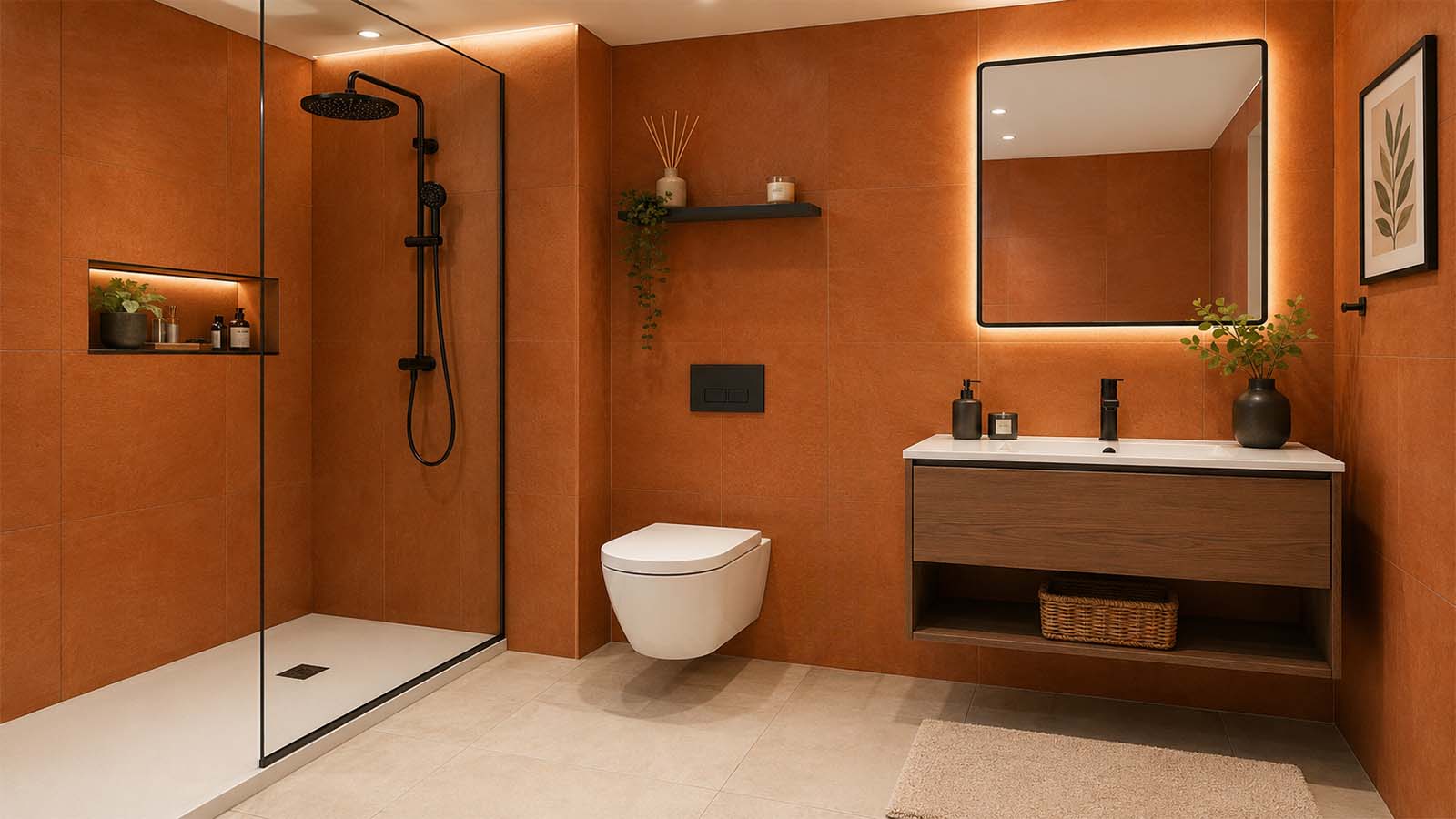
There's no single best toilet cistern for every room — the right choice shifts depending on the space, who uses it, and how it's used. Here's how the concealed-versus-exposed decision plays out room by room.
Small bathrooms
For a small bathroom, a concealed cistern is usually the clear winner. A wall-hung toilet with a hidden tank projects around 10–15 cm (4–6 in) less into the room, and with the floor visible beneath a floating pan, the eye reads more open space — so the room feels noticeably larger than the square footage suggests. This is exactly where a space-saving concealed toilet cistern earns its higher cost. If the budget won't stretch to a full in-wall system, a compact back-to-wall toilet with a slim exposed cistern is a solid runner-up that still tidies the pipework away.
Family bathrooms
For a busy family bathroom, the decision comes down to durability, maintenance and budget rather than looks — and here an exposed cistern often makes more sense. It's cheaper to buy, quicker to fit, and when something inevitably goes wrong in a hard-working household, lift-the-lid access and universally-stocked parts mean a fast, cheap fix (often a DIY one). That said, a concealed system holds up perfectly well too, and its easy-mop floor is a real hygiene win with kids around — so if the budget allows and you want the cleaner look, it's a valid choice. The deciding question is usually: how much do you value quick, low-cost repairs over a minimalist finish?
En-suites
An en-suite is where a concealed system shines. These rooms are all about a sleek, hotel-style, contemporary finish, and the seamless single-flush-plate wall delivers exactly that. Just as importantly, concealed cisterns run quieter — the wall cavity absorbs much of the flush and refill noise — which genuinely matters in an en-suite sharing a wall with the bedroom. For a private, adults' space where design and quiet both count, concealed is the natural pick.
Cloakrooms
A downstairs cloakroom or powder room is the one space where both options work well, so it comes down to preference and layout. A slimline concealed cistern (some frames are as shallow as ~85 mm / 3.3 in) squeezes a premium, space-saving finish into a tight footprint and makes a cramped WC feel far less boxed-in. But because a cloakroom sees light use, a compact exposed or back-to-wall model is a perfectly sensible, lower-cost alternative — especially in a period property where a traditional cistern suits the house. Match the choice to the style of the home and the depth of the wall you've got to work with.
Accessible bathrooms
For an accessible bathroom, the priority is ease of use and reliable servicing, and this needs planning either way. A wall-hung concealed system has a genuine advantage: the pan can be fixed at a comfort height (ADA-height in the US) to suit the user, and its open floor gives clear space for a wheelchair or frame. Two things to get right, though: the flush plate must sit within easy reach and be easy to operate — a large, light-touch or lever-style plate is far better than a small stiff button — and its access position must stay unobstructed for servicing. An exposed cistern with an accessible lever flush is a valid, lower-cost alternative; the key is choosing controls that are simple to reach and use, whichever system you pick.
The short version: concealed suits small bathrooms, en-suites and accessible layouts where space, style and quiet lead; exposed suits family bathrooms and traditional cloakrooms where budget, durability and easy repairs matter more. Both can be the right answer — it depends on the room
Installation Differences: Concealed vs Exposed
Installation is where concealed and exposed cisterns differ most, and it's often the deciding factor once the look and budget are settled. The three toilet types each ask something different of your walls, your plumbing and your installer — here's how they compare, and when it's worth bringing in a professional.
Wall-hung frames (concealed)
A wall-hung toilet is carried entirely by a support frame, not the floor. The frame — a self-supporting, powder-coated steel structure — bolts to the floor and back wall, houses the concealed cistern, and provides the threaded bolts that the pan hangs from. It's rated to hold around 400 kg (880 lbs), so structurally it's more than up to the job — but it has to be mounted dead plumb and level, then boarded and tiled over, with the pan hung only once everything's set. A standard frame needs about 145 mm (5.7 in) of wall depth; slim frames down to roughly 85 mm (3.3 in) exist for shallow walls. This is the most involved install of the three and the heart of the wall hung vs close coupled toilet decision.
Back-to-wall furniture (concealed or exposed)
A back-to-wall toilet sits on the floor with its pan pushed flush against the wall, and the cistern hidden either in the wall or, more commonly, inside a furniture or WC unit behind the pan. This is a useful middle ground: you get concealed pipework and a tidy finish without necessarily opening up the wall, since the unit does the hiding. The unit keeps a removable panel for cistern access. It's less disruptive than a full in-wall frame and a popular retrofit choice.
Close-coupled toilets (exposed)
The simplest install by far. The cistern bolts directly onto the top of the pan as one unit, and the whole suite connects to the existing soil pipe (waste line) and water supply already in place. There's no frame to mount, no wall to open, and no tiling to coordinate — you remove the old toilet and fit the new one. For a like-for-like replacement, this is often a single afternoon's work.
Plumbing requirements
All three need the same two connections — a waste/soil connection and a cold water supply — but the ease differs. A close-coupled swap usually reuses the existing waste and supply positions exactly, so little changes. Concealed and back-to-wall systems give you more flexibility (supply can often feed from the left, right or behind the frame), but if the new toilet's waste outlet doesn't line up with the existing soil pipe, that pipework has to be adjusted — and moving a soil pipe is a significant job. Confirm the outlet position lines up before you commit to a layout.
Wall construction: stud walls vs solid walls
This matters most for concealed systems, and both wall types are catered for:
Stud / plasterboard walls (drywall in the US) — a self-supporting frame is the standard solution. It carries the full load itself and is simply fixed to the studs and floor, then boarded over. In the US, frames are made to suit 2x4 or 2x6 framing.
Solid walls (brick or block) — the cistern is either recessed into a chased-out cavity, or, more often, a new false stud wall is built in front of the masonry to house the frame and pipework. Building that false wall adds depth to the room and is worth planning for.
An exposed close-coupled toilet, by contrast, is largely indifferent to what the wall behind it is made of — it stands on the floor and just needs a fixing or two into the wall for stability.
When to use a professional
Close-coupled replacement — a confident DIYer can often handle a straight like-for-like swap, provided the waste and supply positions don't change.
Wall-hung / concealed systems — professional installation is strongly recommended. Getting the frame plumb and level, carrying the pan's load safely, waterproofing correctly, and coordinating the rough-in with tiling all leave little room for error. A mistake hidden behind a tiled wall is expensive to put right, and DIY installation can void the manufacturer's warranty.
Any job that moves the soil pipe, alters the waste run, or changes the water supply — bring in a professional. Beyond the skill involved, building regulations apply, and in many US jurisdictions this type of work requires a permit and/or a licensed plumber. Rules vary by country, state and municipality, so check your local requirements before starting.
In short: exposed close-coupled toilets are the DIY-friendly, low-disruption option; concealed and wall-hung systems deliver the premium finish but genuinely benefit from a professional and proper planning. If in doubt, the cost of getting a concealed system fitted correctly the first time is far lower than the cost of opening a wall to fix it later.
Maintenance and Repairs
The single biggest hesitation people have about a concealed cistern is a simple one: if it's sealed inside the wall, what happens when it needs fixing? It's a fair question — and the reassuring answer is that modern concealed systems are specifically engineered to be serviced without touching the wall. Here's how maintenance and repairs actually work for both types, and what to expect over the long term.
How concealed cisterns are serviced
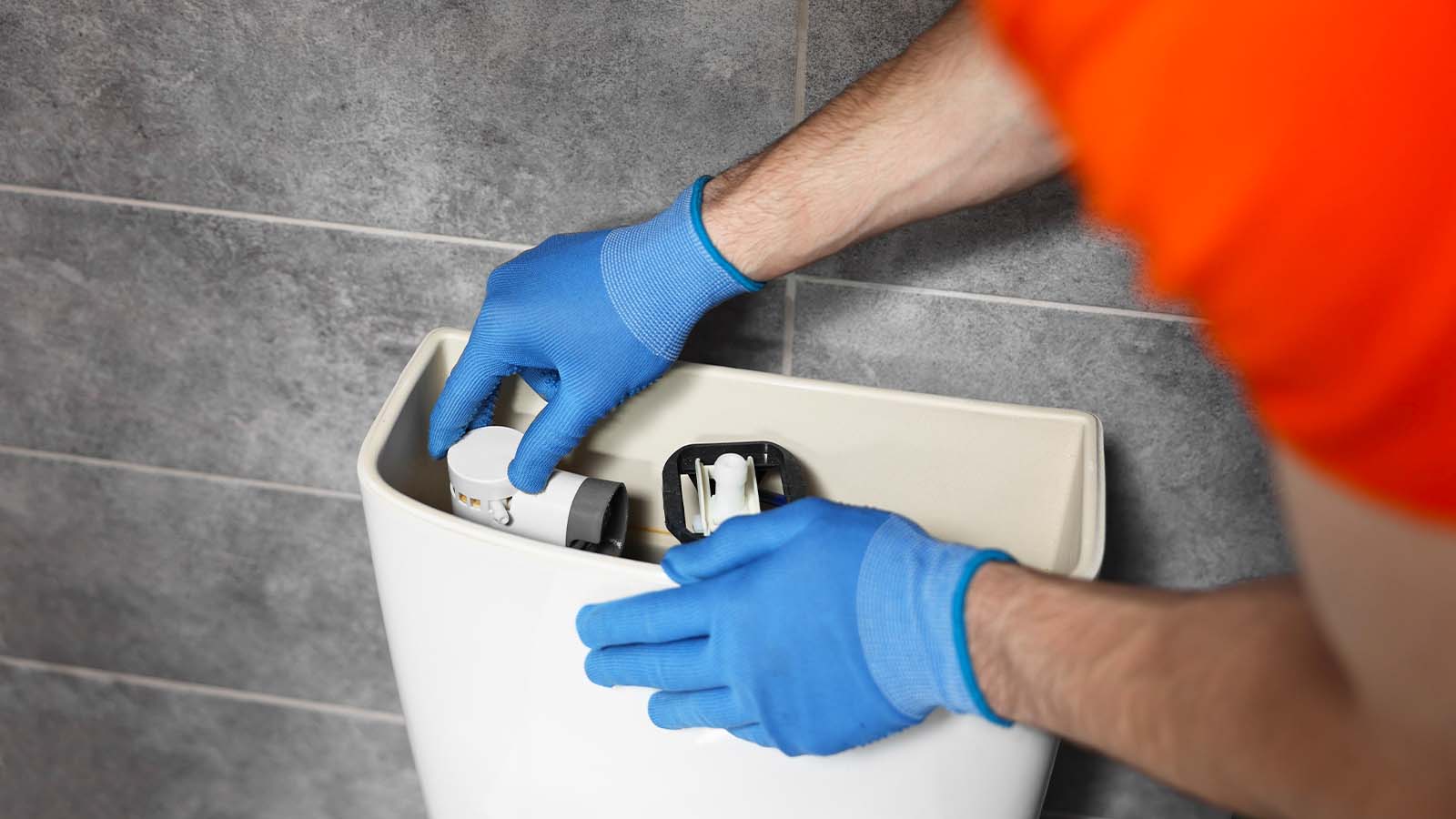
The flush plate isn't just decoration — it's the service hatch. On any quality system, the plate unclips and lifts away to reveal a service opening that gives direct, usually tool-free access to the cistern's working parts. Everything you'd routinely need to reach — the fill valve, the flush valve, the seals — is designed to come out and go back in through that opening, with the water isolated at a shut-off built into the cistern behind the plate. You can adjust the flush volume there too. In other words, the tank body stays in the wall; only the mechanism comes out, through a hole roughly the size of the plate. This is by design, and it's why a routine concealed-cistern repair is a genuinely straightforward visit, not a demolition job.
Replacing valves and seals
On both cistern types, the parts that actually wear are the same handful of components: the fill (inlet) valve, the flush valve or siphon, and the rubber seals and washers. These are consumables — they perish or clog with limescale over years of use — and replacing them is standard plumbing work. On a concealed system it's done through the flush-plate opening; on an exposed one, by lifting the lid. Neither requires replacing the whole cistern. Our guide to common concealed toilet cistern problems and how to fix them walks through the specific faults, from a weak flush to a running valve, and how each is put right.
Typical repairs for exposed cisterns
Exposed cisterns are as simple as maintenance gets. The most common jobs are a continuously running fill valve (usually a worn valve or float needing adjustment or replacement), a weak or partial flush (often a failed flush washer or siphon diaphragm), and minor leaks at the tank-to-pan seal or supply connection. Lift the lid and the culprit is visible; most of these are inexpensive parts and many are well within DIY reach. It's this lift-the-lid simplicity that keeps exposed cisterns popular in busy households.
Availability of replacement parts
This is where brand choice matters — and it matters more for concealed systems. Exposed-cistern parts are effectively universal: washers, valves and flush mechanisms are stocked in every plumbers' merchant and DIY store, cheap and easy to find. Concealed systems use more brand-specific internals, so the safeguard is to buy a reputable, established brand from the outset.
Long-term reliability
Both systems are built to last for decades, and the hidden cistern is no more failure-prone than the visible one — arguably less, since the sealed HDPE tank body is blow-moulded in one seamless piece with no joints to leak and is protected from knocks inside the wall. Quality concealed systems are tested to the equivalent of 50 years of use (hundreds of thousands of flush cycles) before they're sold. With routine care — the odd valve or seal over its lifetime, and a light-touch cleaner on the flush plate — you can expect a long, trouble-free service life from either type.
The bottom line: concealed cisterns are designed for maintenance access, not against it — the flush plate is a purpose-built service point, and the parts that wear are all reachable through it. Pair that with a well-known brand and long spare-parts guarantee, and the sealed in the wall fear simply doesn't hold up. Exposed cisterns remain the easiest and cheapest to service, but a modern concealed system is far more maintainable than most people assume.
Water Efficiency: Concealed vs Exposed
Here's the most important thing to know before you weigh cisterns on water use: whether a cistern is concealed or exposed has almost no bearing on how much water it saves. Both types use the same modern flushing valves and the same dual-flush technology. Water efficiency is determined by the model and its internals — the flush volume, the valve, the certification — not by whether the tank sits in the wall or on the pan. Choose a water-efficient toilet cistern in either format and you'll get the same savings.
With that settled, here's what actually drives efficiency, and what to look for.
Dual-flush systems
Dual flush is the single biggest water-saver in modern toilets. Instead of one fixed volume, you get two buttons: a full flush for solids and a reduced flush for liquids. Typical modern volumes are around 6 litres (1.6 US gallons) full and 3–4 litres (0.8–1.1 US gallons) reduced. Since most flushes are liquid-only, choosing the smaller flush most of the time adds up quickly. Both concealed flush plates and exposed dual-flush buttons operate the same underlying mechanism.
Adjustable flush volumes
Many modern cisterns let a plumber fine-tune the flush volume at the valve during installation to suit your water pressure and drainage — trimming a full flush that's more than the bowl needs, for example. On a concealed system this is adjusted at the flush valve through the flush-plate opening; on an exposed one, inside the tank. It's a small, often-overlooked way to shave off further water without any drop in performance.
Water-saving technology
Beyond dual flush, look for models with genuinely optimised, low-volume flush valves (the US WaterSense standard caps the full flush at 1.28 US gallons / 4.8 litres — about 20% below the old federal benchmark — while still clearing the bowl properly). A quiet-fill (bottom-entry) valve also helps by refilling efficiently and quietly. These are model features, available on both concealed and exposed cisterns alike.
Certifications and labels to look for
This is where your region matters, because each market has its own mark — and they don't all measure the same thing:
US — WaterSense. An EPA efficiency label. A WaterSense-labelled toilet is independently certified to use no more than 1.28 US gallons (4.8 litres) per full flush while passing strict flush-performance tests. This is your efficiency benchmark.
UK — WRAS approval. Worth understanding correctly: WRAS (the Water Regulations Advisory Scheme) confirms a product complies with the Water Supply (Water Fittings) Regulations — it's primarily about water safety and compliance (no contamination, no waste), which includes flush-volume limits, rather than being an efficiency score in itself. Under those rules, a dual-flush reduced flush can't exceed two-thirds of the full flush (so a 6-litre full flush pairs with a reduced flush of 4 litres or, commonly, 3). WRAS approval is voluntary, but it's the most recognised way to prove compliance.
UK — the new Mandatory Water Efficiency Label (MWELS). The UK government has confirmed a mandatory A–F water efficiency label is being introduced in 2026 for products including toilets, shown at the point of sale (much like the familiar energy-efficiency label) and set to feed into building regulations over time. If you're buying soon, this is the rating to watch for.
Europe — the Unified Water Label (UWL). A voluntary, industry-run label used across Europe that rates a product's water (and energy) performance, making it easy to compare efficiency at a glance.
Potential reductions in water use
The savings from a modern cistern are substantial, whichever format you choose. Older cisterns poured through 9–13 litres (2.4–3.4 gallons) on every single flush; a modern dual-flush system uses roughly 6/3 litres. In practice, upgrading old toilets can cut toilet-related water use by anywhere from around 20% to 60% — in the US, the EPA estimates a typical household saves on the order of 13,000 gallons a year by switching to efficient models, with real money off the water bill too. Real-world commercial retrofits have reported water savings in the region of 45–50% simply by replacing old high-volume toilets with modern dual-flush ones.
The bottom line: don't choose between concealed and exposed on water efficiency — it's a genuine tie. Instead, choose an efficient model: a dual-flush cistern with a low full-flush volume, carrying the right certification for your market (WaterSense in the US, WRAS plus the incoming MWELS label in the UK, the Unified Water Label in Europe). Do that, and you'll get the same water savings whether the tank is proudly on show or hidden in the wall.
Cost Comparison: Concealed vs Exposed
Cost is often the deciding factor, and it's where exposed cisterns pull clearly ahead. But the headline concealed costs more hides the detail that matters: the gap comes from several separate items, some of which buyers only discover mid-project. Here's the full breakdown with approximate 2026 prices. Treat these as planning ranges only — actual costs vary significantly by brand, region and installer, so always get two or three quotes before you set a budget. (European prices broadly track the UK figures in euro terms.)
Product price
The toilet itself is the first difference. An exposed close-coupled suite is the most affordable complete toilet you can buy — roughly £80–£250 in the UK, or $100–$500 in the US (a basic model starts around $100–$200; an elongated comfort-height one runs $200–$500). A concealed setup means buying a system, not a single unit: a wall-hung pan alone typically runs £150–£400 / $300–$800, and it's rarely sold complete — the frame, cistern and plate are often priced separately.
Installation costs
This is the single biggest driver of the gap. An exposed like-for-like swap onto existing plumbing is one of the simplest plumbing jobs there is — around $150–$300 in US labour, and similar in the UK in pound terms for a few hours' work. A concealed install is a different job: the frame must be mounted level, the pan's load supported, the system roughed in before tiling, then the plate fitted afterwards — often opening and re-finishing a wall. US labour for a wall-hung install runs $300–$800, and the total premium over a floor-mounted toilet is commonly $700–$2,000+.
Frames (for wall-hung systems)
The steel support frame is a concealed-only cost. Budget frames start low, but a quality branded frame-and-cistern unit (Geberit, Grohe, Ideal Standard) sits from around £150 upward in the UK, or $300–$600 for an in-wall carrier in the US. It isn't the place to cut corners — the frame carries the toilet's entire load, and a cheap unbranded one risks parts you can't source later.
Flush plates
Easy to forget, because it's almost always sold separately from the cistern. A basic chrome or white plate is inexpensive (around £20–£40 / $20–$50), but designer plates in glass, brushed metal or touchless sensor versions can run £60–£200+ / $80–$250+. Budget for it as its own line item — a £150 cistern isn't finished until the plate is on.
Furniture units
If you go the back-to-wall furniture route rather than a full in-wall frame, the WC unit itself is the cost — roughly £80–£300+ depending on size and finish. This can be a sensible middle ground: tidier than a bare exposed cistern, without the full expense of opening up a wall.
Maintenance expenses
Running costs are low for both, but exposed has the edge. Minor faults on an exposed cistern are often a DIY fix with no call-out fee; on a concealed system, routine work through the flush plate is still cheap and quick, but you're more likely to call a plumber. The one scenario that can cost meaningfully more is the rare structural repair on a concealed system that requires opening the wall.
Replacement parts
The parts that actually wear are cheap on both. A fill valve, flush valve or seal is typically £5–£25 / $10–$25, and on exposed cisterns these are universal and stocked in every merchant and DIY store. On concealed systems they're more brand-specific — another reason to buy an established brand, whose spares stay available for decades and are easy to source.
The typical total picture
Putting it together, for a single bathroom:
Exposed close-coupled — budget roughly £150–£450 / $275–$800 all-in for a standard replacement.
Concealed wall-hung — budget roughly £400–£900+ for the parts (pan, frame, cistern, plate), plus professional installation on top; in the US, all-in figures commonly land at $1,000–$3,000+ — often three to five times the cost of an exposed swap.
The gap is real, but so is what you're paying for: the look, the space and the quiet. For a main or secondary bathroom you'll keep for years, many people find it well worth it; for a quick replacement or a rental, exposed is hard to beat on value. And across a multi-bathroom project, the difference compounds — so it's worth factoring in early.
Which Style Suits Your Bathroom Design?
Your cistern isn't just plumbing — it's a design decision that either reinforces your bathroom's style or quietly works against it. The right choice depends less on the cistern in isolation and more on the look you're building around it. Here's how concealed and exposed cisterns fit the three most popular bathroom styles.
Modern bathrooms
Modern and contemporary schemes are built on clean lines, uninterrupted surfaces and a sense of calm — and this is concealed-cistern territory. A wall-hung toilet with a concealed cistern is almost the signature of a modern bathroom: the floating pan, the open floor beneath it, and a single flush plate on an otherwise seamless tiled wall. Nothing is on show that doesn't need to be, which is exactly the minimalist effect these interiors aim for.
To lean into the look: pair it with large-format tiles or micro-cement walls, a matte-black, brushed-brass or brushed-steel flush plate to match your brassware, and wall-hung furniture so the whole room reads as if it's floating. This is where a modern concealed toilet genuinely earns its higher cost — it delivers a finish an exposed cistern simply can't.
Traditional bathrooms
Period, Victorian, Edwardian and cottage-style bathrooms are all about visible craftsmanship and authentic detail — and here an exposed cistern is the right choice, not a compromise. A hidden tank would actually undermine the look; the cistern is meant to be seen.
Two exposed styles define this aesthetic. A high-level cistern — mounted near the ceiling with a long flush pipe and a pull chain — is the classic Victorian throne, full of period character. A low-level cistern, sitting on the wall just above the pan with a short chrome flush pipe, gives a slightly softer traditional look that suits Edwardian and country schemes. Finish either with period-inspired fittings: a ceramic lever or wooden pull, a high-level wooden or ceramic cistern, chrome or nickel pipework, and a traditional close-coupled or button-back pan. These details are the whole point of the style.
Transitional designs
Transitional bathrooms — the most popular middle ground — blend the clean function of modern design with the warmth of classic styling, and this is where cistern choice gets genuinely clever. You don't have to choose between a hidden tank and a traditional look: you can have both.
The trick is to combine a concealed cistern's tidiness with classic aesthetics. Options include a traditional-style back-to-wall pan fitted with a concealed cistern (period silhouette, hidden tank, easy-to-clean floor), a concealed cistern paired with a traditional-style flush plate or lever rather than a stark modern button, or a clean close-coupled toilet with modern rimless technology dressed with classic fittings and a shaker-style vanity. The result is a bathroom that feels timeless rather than tied to a trend — modern where it counts (cleaning, water efficiency, space), classic where it's seen.
In short: go concealed and wall-hung for modern minimalism, exposed high- or low-level for authentic period character, and a hidden-tank-with-classic-styling mix for a transitional look that borrows the best of both. Match the cistern to the style, and the whole room feels considered.
Which Toilet Cistern Is Right for You?
There's no universally best toilet cistern — the right one comes down to your single biggest priority. Work out what matters most for your bathroom, find it in the decision matrix below, and you'll have your answer.
The decision matrix
If your priority is… | Best choice | Why |
A modern, minimalist look | Concealed | Seamless wall; tank and pipework hidden |
A small bathroom or compact space | Concealed | Wall-hung pan projects ~10–15 cm (4–6 in) less |
A luxury, high-end finish | Concealed | Hotel-style look with a designer flush plate |
Quiet operation | Concealed | Wall cavity muffles the flush and refill |
Easier cleaning around the toilet | Concealed | Open floor beneath a wall-hung pan; fewer crevices |
Lower upfront cost | Exposed | No frame or separately-priced plate to buy |
A straightforward, quick replacement | Exposed | Bolts onto your existing plumbing |
Easy DIY maintenance and repairs | Exposed | Lift-the-lid access; cheap, universal parts |
Traditional or period styling | Exposed | High- and low-level cisterns suit classic schemes |
No wall work / lowest installation cost | Exposed | No frame, roughing-in or tiling to coordinate |