Introduction
How to style brushed brass in a bathroom: what it goes with, what it fights, how it wears over time, and how much is too much.
It looks effortless in the showroom. Warm, soft, quietly expensive, every piece sitting exactly where a stylist put it. Bring the same finish home and it can tip into something closer to chaos: three brass pieces all competing for attention on one small wall. The difference has nothing to do with budget. It's restraint, and once you understand how brushed brass bathroom accessories actually behave in a real, lived-in bathroom, restraint is easy enough to get right. Search around online and you'll find plenty of glossy inspiration and not much practical advice on where the finish actually trips people up, which is exactly what this guide sets out to fix.
A Quick Breakdown
Go for lacquered brushed brass if you want zero maintenance, or for the unlacquered one if you like the idea of a finish that ages on its own terms. Keep it to two or three pieces rather than a full set, pair it with something cooler like matte black, and let brass carry roughly seventy percent of the look rather than all of it. That combination avoids the showroom-gone-wrong effect almost every time.
Brushed, Satin, Polished: What's Actually the Difference
The naming around brass finishes trips people up more than almost anything else in bathroom shopping, so it's worth untangling before you buy a thing. Brushed brass has a fine, directional texture that softens the shine into a muted, warm glow rather than a mirror finish. Polished brass is the opposite: smooth, properly reflective, closer to what most people picture when someone says gold fittings. Satin brass sits in between, smoother than brushed but not as loud as polished. Antique brass is deliberately aged, with darker tones worked into the recesses so it looks like it's had decades of wear from day one. Unlacquered brass has no protective coating at all, so it genuinely changes colour and develops a patina the more you touch and use it.
Then there's brushed gold, a term some retailers use almost interchangeably with brushed brass, even though gold finishes tend to run slightly brighter and cooler. If a product photo looks a little too perfect, check whether the listing actually says brushed brass or brushed gold. They're not always the same thing, whatever the search results suggest.
Is Brass Actually Still a Good Idea?
Genuinely, yes, and it's past the point where that answer feels like a risk. Brass had its viral moment a few years back, the kind of sudden popularity that makes cautious buyers wait before committing. It's since settled into the mainstream alongside chrome and matt black, and that's precisely the phase where a finish stops dating a room and just becomes a sensible, durable choice. Fit brushed brass towel rings, a toilet roll holder and a robe hook today and none of it will look like a fad five years from now, in the way something more novelty-driven might.
The Question Nobody Thinks to Ask Before Buying
This is the one decision that matters more than any other on this page, and almost nobody stops to ask it. Lacquered brass holds its finish well for years, though the coating can eventually wear at points of constant contact, such as on a robe hook that holds a towel every day. Unlacquered brass, sometimes called a living finish, has no coating at all, so it reacts to air, moisture and touch and slowly darkens into a patina that's unique to your own bathroom.
Neither is the wrong choice, but it isn't reversible once the piece is fitted and being used daily. Go lacquered if you want the finish to look identical on day one thousand as it did on day one. Go unlacquered if you actually want that ageing character and you're comfortable letting a process you can't control or undo run its course.
What Actually Sits Well With It
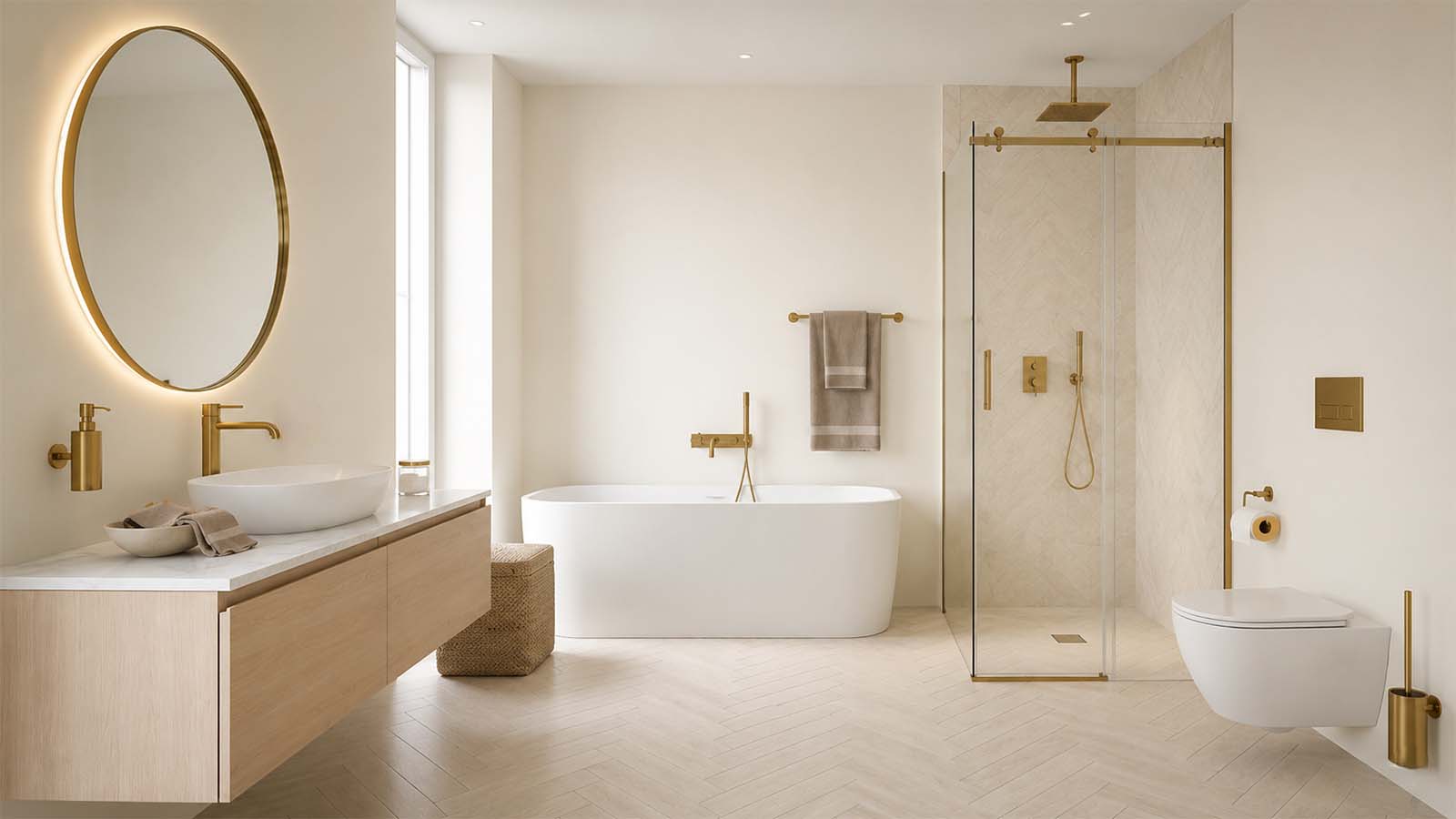
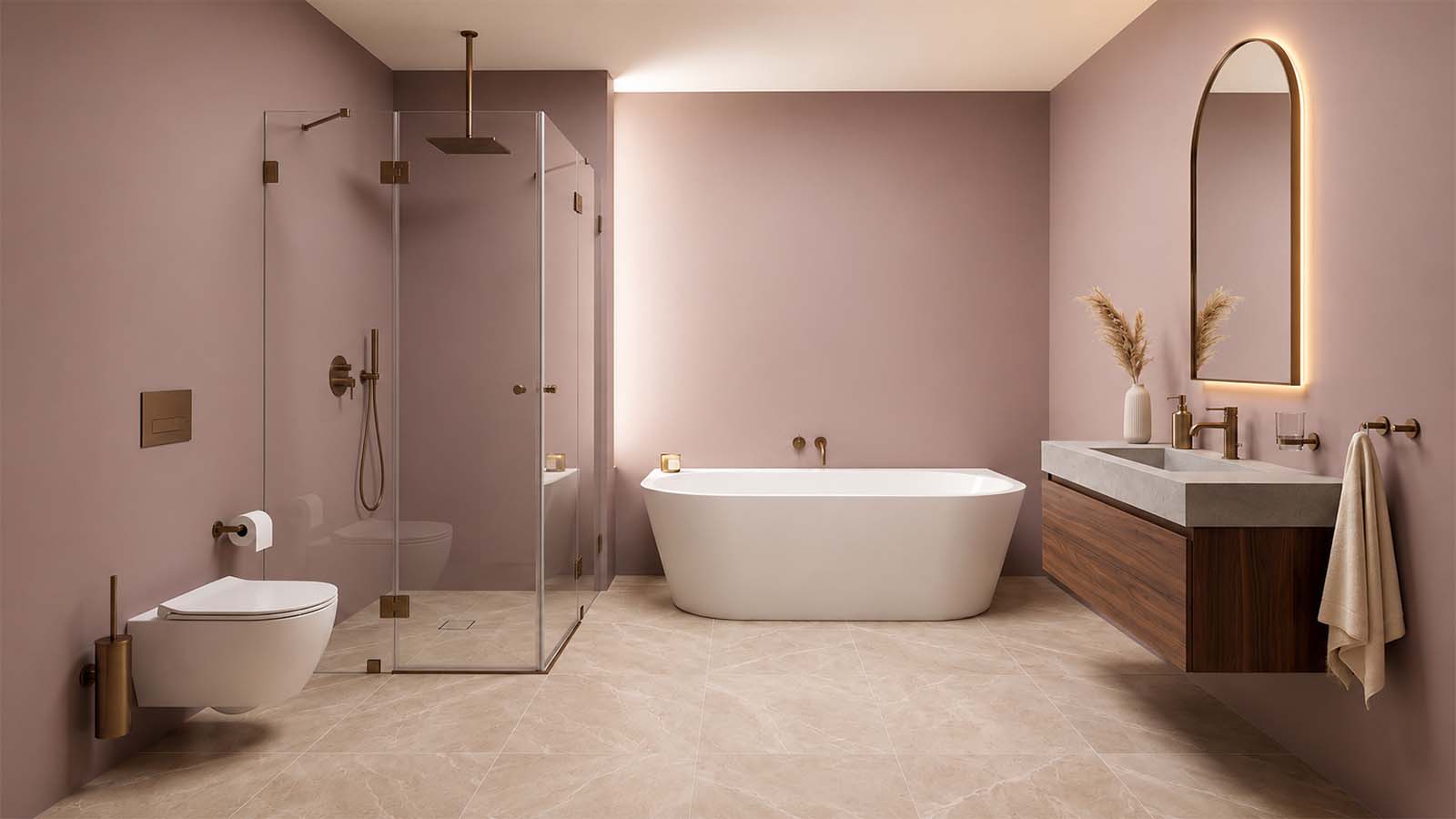
Brass is warm, so it wants warm or neutral company rather than anything cold. White and off-white walls let it stand out without a fight. Deep green, navy and charcoal all give it something rich to sit against, which is exactly why so many brushed brass bathroom ideas lean on darker paint rather than pale. Terracotta and warm timber echo the metal's own warmth, and natural stone, especially anything with warm veining, tends to flatter brass rather than clash with it.
None of this is really about taste so much as physics. A colour is warm or cool in the same way a metal is, and putting two warm elements together (brass against a terracotta wall, for example) is exactly what produces that rich, layered look you see in the better brushed brass bathroom design work. If you're building a full brushed brass bathroom design ideas board, start with the wall colour and choose the metal second, not the other way round.
What It Fights, Especially the Thing Nobody Warns You About
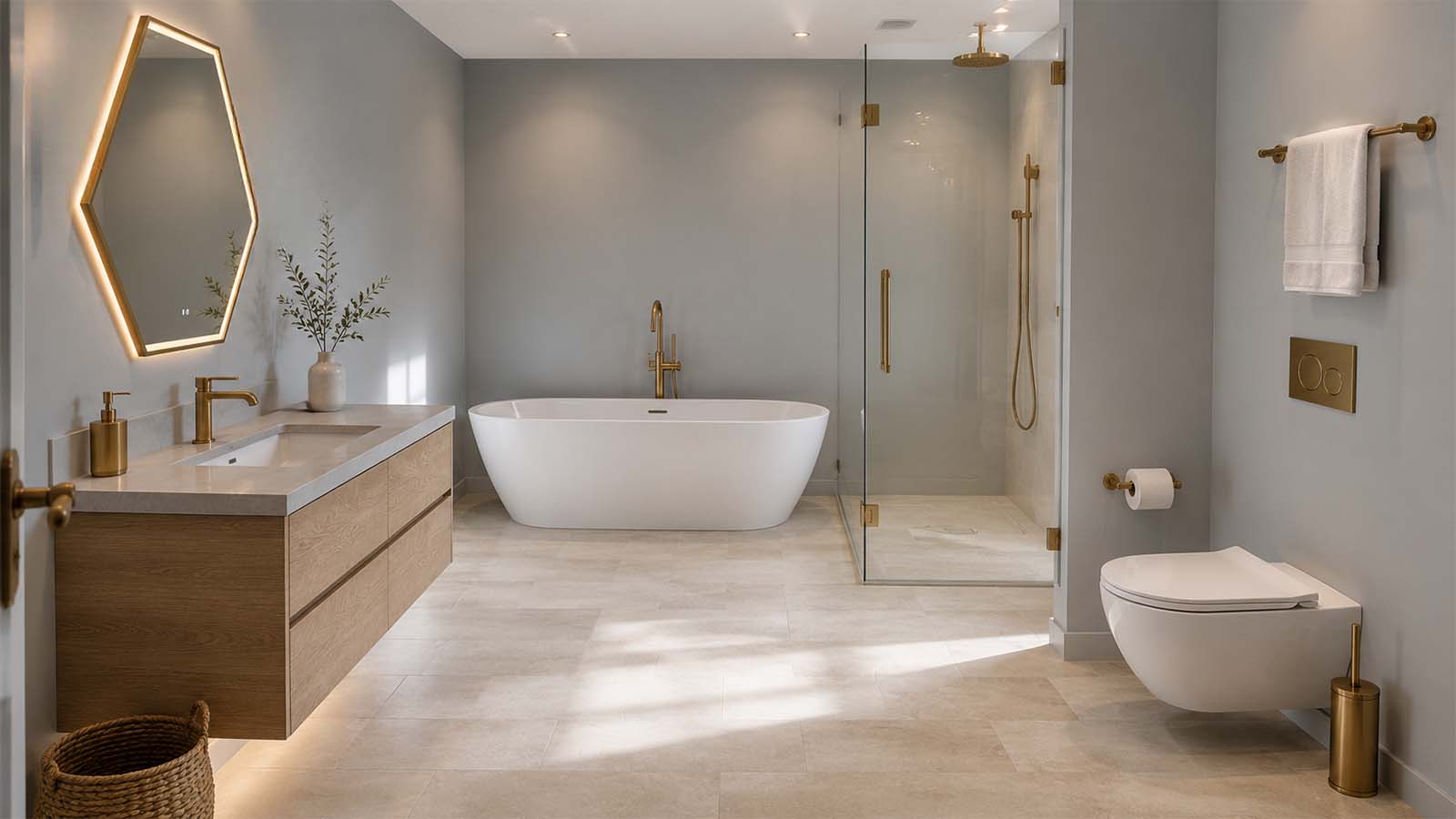
Cool grey is brushed brass's least forgiving neighbour. Put a warm metal against a stark, blue-toned grey and the brass can start to look faintly tarnished rather than rich, simply because the two colour temperatures are pulling in opposite directions. Stark blue-whites cause much the same problem. And here's the detail most buying guides skip entirely: brass under cold-toned LED lighting can look flat and yellow instead of warm and golden, because a cool white bulb strips out exactly the warmth that makes brass appealing in the first place. If your bathroom runs on cool white spotlights, brass might not photograph, or live, quite the way you're expecting.
Tiles That Flatter It, and the One Combination to Skip
Matt white tiles are the safest, most flattering backdrop for brushed brass, since the lack of shine doesn't compete with the metal's own texture. Zellige tiles, with their handmade irregularity and soft glaze, pair beautifully with brass for much the same reason; both finishes feel a little imperfect and warm. Warm marble and terrazzo both work too, as long as the veining or fleck leans warm rather than cool. Dark green tiles alongside brass are a genuine designer favourite; the two seem to have been made for each other.
The one combination worth avoiding entirely is high-gloss cool grey tiling. The shine competes with the metal, the undertone fights the warmth, and it's a hard combination to soften once it's already tiled and grouted.
How Much Brass Is Too Much Brass
This is where most brushed brass bathrooms actually go wrong. Once you love the finish, the temptation is to buy everything in it: rail, mirror, shelf, bin and toothbrush holder, until the room starts reading like a brass showroom rather than a home. The better approach is the same seventy-thirty split that works for any accent finish: let the towel rail, the toilet roll holder and one robe hook carry the look, and leave smaller, less visible items like the bin or the toothbrush holder in something quieter. Those three key pieces get seen and touched constantly, so they do the heavy lifting while everything else stays out of the spotlight.
Brass Next to Chrome or Black: Does It Work?
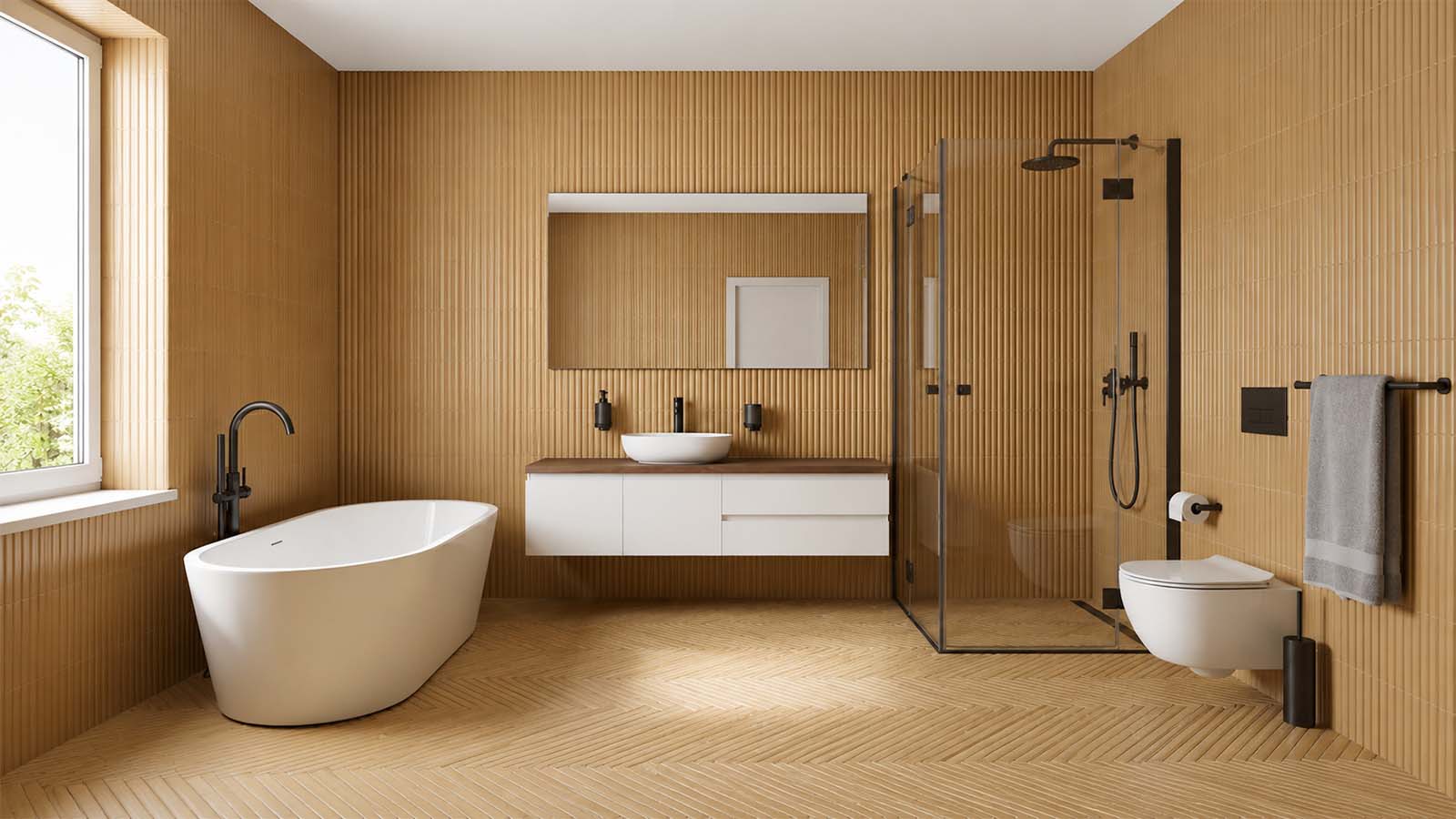
Brass and matte black is one of the most dependable pairings in bathroom design, warm against neutral-cool, and it's worth trying if committing to brass alone still feels like a stretch. Brass and chrome is trickier, since both finishes have a bit of shine and can end up competing rather than complementing, though it can work in small, understated doses. Brass and nickel, brushed or polished, is the one to steer clear of almost entirely. The two sit close enough in tone to read as a mismatch rather than a deliberate mix, without being similar enough to actually feel intentional.
Easing Into It Without Committing the Whole Room
If you're testing the water rather than diving straight in, start with the three pieces that establish the finish without overwhelming the space: the towel rail, the toilet roll holder and a single robe hook. These three turn up in nearly every brushed brass bathroom accessories UK search for good reason, since together they define the whole look before you've spent a fortune finding out whether you actually love it.
The table below is a handy reference if you're working through a proper brushed brass bathroom buying guide and want to know roughly where each product sits in terms of priority.
|
Product |
Priority |
When to buy it |
|
Brushed brass towel rail |
High |
First |
|
High |
First |
|
|
Brushed brass robe hook |
High |
First |
|
Brushed brass heated towel rail |
High |
Early, if replacing the heating system |
|
Brushed brass radiator valves |
High |
First, as they are required for radiator installation |
|
Brushed brass tumbler holder |
High |
First, as an everyday bathroom essential |
|
Brushed brass toilet brush holder |
High |
First, as an everyday bathroom essential |
|
Brushed brass soap dish or dispenser |
Medium |
Once the main essentials are in place |
|
Brushed brass bathroom mirror |
Medium |
Once other finishes are settled |
|
Brushed brass bathroom shelf |
Medium |
Buy as an additional storage feature |
That kind of staged shortlist is also useful if you're hunting for the best brushed brass bathroom accessories UK shoppers actually rate, since the pieces bought first tend to be the ones most reviewed and photographed.
Taps First, or Accessories First?
The fixtures set the rule, not the accessories. Renovating from scratch, choose your basin mixer tap and shower set in brass first, since they're expensive and disruptive to change later, and let the smaller accessories follow that lead. If your taps are already fixed in a different finish, brass accessories can still work as an accent, provided you're following the mixing advice above rather than trying to force an exact match.
This matters more than it might seem, because a mismatch between taps and accessories is one of the most common regrets people mention after a renovation. Nobody wants to notice, every single morning, that the tap and the towel rail were clearly bought at different times with different plans in mind. Settling the fixtures first, even just on paper, before a single accessory goes in the basket, avoids that entirely.
What Two Years of Daily Use Actually Looks Like
Here's the less glamorous, more honest part of the brass conversation. Lacquered brass holds its finish well for years, though the coating can eventually wear at points of constant contact, a robe hook that takes a towel every single day, for instance. Fingerprints show up more readily on polished and satin brass than on the textured brushed finish, which is one practical reason brushed remains the most popular of the family. Water spots and hard water marks are a factor near any basin or shower, and a brushed texture hides those far better than a smooth, polished surface would. Unlacquered brass, of course, is designed to change, so marks and patina there are part of the plan rather than a flaw creeping in.
Cleaning It Without Ruining It
A soft cloth and warm water sort out most day-to-day marks on lacquered brass, no fuss involved. Skip anything abrasive, and skip most traditional brass polish entirely, since polish made for solid, unlacquered brass can strip a lacquer coating and dull the finish underneath permanently. If you've gone unlacquered and want to slow the patina down a little, a light coat of a suitable protective wax can help, but check the manufacturer's own care advice first. The wrong product does more damage than the water spots you were trying to avoid in the first place.
Small Bathrooms Actually Suit Brass Rather Well
In a compact bathroom or cloakroom, brass earns its keep because it reads as warm and inviting rather than cold and clinical, exactly the feeling most people want from a small, enclosed room. Keep the piece count low; a rail and a hook are often plenty, and lean on warmer lighting rather than cool white bulbs, since a small room shows off both the best and worst of any finish far more obviously than a larger one would.
A single brushed brass towel ring beside the basin, paired with a matching hook behind the door, is usually enough to establish the finish in a cloakroom without any risk of overdoing it. A small room also has fewer surfaces to fill in the first place, which makes the seventy-thirty rule from earlier easier to hold, since there simply isn't space for a fourth or fifth brass piece to sneak in and tip the balance.
The Five Ways This Goes Wrong
Buying every single accessory in brass, instead of the two or three that actually matter, is the classic mistake, turning a considered accent into a full showroom effect. Pairing it with cool grey and cold lighting is another, stripping out exactly the warmth that makes the finish worth having. Choosing unlacquered brass without realising it will genuinely change colour catches plenty of people out, an unwelcome surprise for anyone expecting a fixed, static finish. Using traditional brass polish on a lacquered piece is a quieter mistake that often permanently dulls a surface that never needed polishing at all. And fitting brass accessories against taps in a completely different, competing finish, with nothing bridging the two, rounds out the list.